


What is Angiogenesis? Big Tobacco Hopes You Don’t Know.
Don’t worry, I didn’t know what angiogenesis was either, until I wrote my book – “Wigmore on Nicotine and Its Drug Delivery Systems. The Medicolegal Aspects of Our Most Addictive and Dangerous Legal Drug.” Angiogenesis was not even in the LinkedIn dictionary when I was writing this article; I had to add it to the dictionary to get the underline red line to disappear.
Understanding Angiogenesis and Its Role in Cancer Development
Angiogenesis is the development of new blood vessels, which in the normal functioning of the human body is beneficial. However, when this process fuels cancer cells by developing new blood vessels to feed them, it allows malignancies to grow and spread aggressively throughout the body. This biological mechanism essentially creates a dedicated blood supply directly to tumours, enabling them to expand beyond a microscopic size and potentially metastasize to distant organs.
Nicotine: Lifeline for Cancer Cell Growth and Brain Cancer
Recent research has illuminated how nicotine acts as a catalyst for cancer progression. AI Overview confirms that angiogenesis, the process of forming new blood vessels, is crucial for cancer cells as it provides them with the necessary oxygen and nutrients to grow and spread. By creating a blood supply directly to the tumour, angiogenesis allows cancer to expand beyond a certain size and potentially metastasize to other parts of the body. Essentially, angiogenesis acts as a lifeline for cancer growth and invasion.
Big tobacco has been promoting the alleged benefits of the neurotoxin and banned pesticide nicotine for many years while simultaneously downplaying its carcinogenic effects. The wiggle room for denying this toxic chemical’s role in cancer is getting smaller and smaller as more recent research not sponsored by the tobacco industry reveals its dangerous effects.
Key findings about nicotine’s role in cancer promotion:
-
Stimulates the formation of new blood vessels that feed tumours
-
Provides essential nutrients and oxygen to cancer cells
-
Enables rapid tumour growth and expansion
-
Facilitates cancer metastasis to other body parts
-
Creates conditions for brain cancer development in smokers
Nicotine Causes Cancer Research
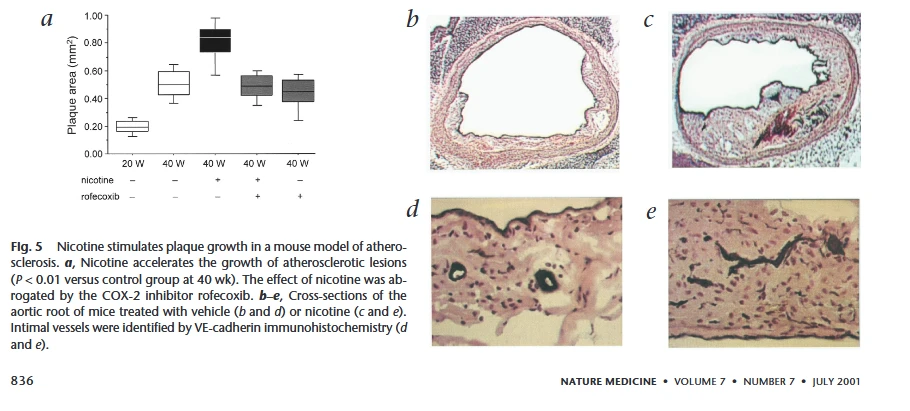
Even if nicotine does not directly cause cancer initiation, there is no doubt it promotes cancer by providing a blood supply to cancer cells so they can spread quickly throughout the body. The groundbreaking research by Heeschen et al in 2001 demonstrated this connection, showing how nicotine stimulates angiogenesis and promotes tumour growth and atherosclerosis. Their work revealed that nicotine activates endothelial cells, which line blood vessels, triggering the formation of new vascular networks that feed growing tumours.
This may explain in part why over half the smokers who get lung cancer have cancer spread to the brain as well. The 2023 study by Yu et al published in Frontiers in Neurology established a clear association between smoking and reduced survival rates in patients with brain metastasis of lung cancer. When lung cancer spreads to the brain, patients face significantly worse outcomes, and nicotine’s role in promoting angiogenesis likely contributes to this devastating complication.
The tobacco industry has spent decades and billions of dollars attempting to rehabilitate nicotine’s image. From introducing “light” cigarettes to developing heat-not-burn products, e-cigarettes, and nicotine pouches, they continuously reinvent delivery methods while the core ingredient remains unchanged. Nicotine remains a highly poisonous neurotoxin, banned pesticide, and potential chemical weapon, regardless of how it’s packaged or marketed.
Conclusion
No matter how the tobacco industry tries to change its delivery of nicotine from cigarettes to light cigarettes to heat-not-burn, to e-cigarettes to nicotine pouches, it is still based on the highly poisonous neurotoxin, banned pesticide, and potential chemical weapon, nicotine. There is no doubt that nicotine, although it may not directly cause cancer initiation, promotes cancer progression through angiogenesis stimulation. Understanding angiogenesis and its role in feeding cancer cells is crucial for public health awareness and informed decision-making about nicotine product use.
References
Angiogenesis: FAQs
What is angiogenesis in simple terms?
Angiogenesis is the process of forming new blood vessels from existing ones, which can either help heal the body or feed cancer cells.
How does nicotine affect cancer growth?
Nicotine promotes angiogenesis, creating new blood vessels that supply oxygen and nutrients to tumours, enabling them to grow and spread.
Does nicotine directly cause cancer?
While nicotine may not directly initiate cancer, it promotes cancer progression by stimulating blood vessel formation that feeds malignant cells.
Why do smokers get brain cancer more often?
Over half of smokers with lung cancer develop brain metastases because nicotine promotes angiogenesis, helping cancer cells spread through the bloodstream to the brain.
What did the Heeschen 2001 study discover?
The study found that nicotine stimulates angiogenesis and promotes tumour growth and atherosclerosis, establishing a direct link between nicotine and cancer promotion.
Is nicotine a pesticide?
Yes, nicotine is a banned pesticide and neurotoxin that was historically used for insect control before its dangers were fully understood.
How does Big Tobacco hide nicotine's dangers?
The industry continuously rebrands nicotine delivery through products like e-cigarettes and pouches while downplaying its role in promoting cancer through angiogenesis.
Can nicotine from e-cigarettes promote cancer?
Yes, any form of nicotine, regardless of delivery method, can stimulate angiogenesis and promote cancer growth and spread.
What happens when cancer cells trigger angiogenesis?
Cancer cells create their own blood supply through angiogenesis, allowing tumours to grow larger, invade nearby tissue, and spread to distant organs.
How does angiogenesis affect lung cancer patients?
Angiogenesis helps lung cancer establish blood supplies that enable growth and metastasis, particularly to the brain, reducing patient survival rates.
Recent News

Is Vaping Safe, or is It Just Bait and Switch from...
The pressing health question for our time—is vaping safe?—takes centre stage at the Toronto Public...
Read More
Do Filters Make Cigarettes Safer?
Cigarette filter safety has been a deceptive promise for decades. A relative of mine in...
Read More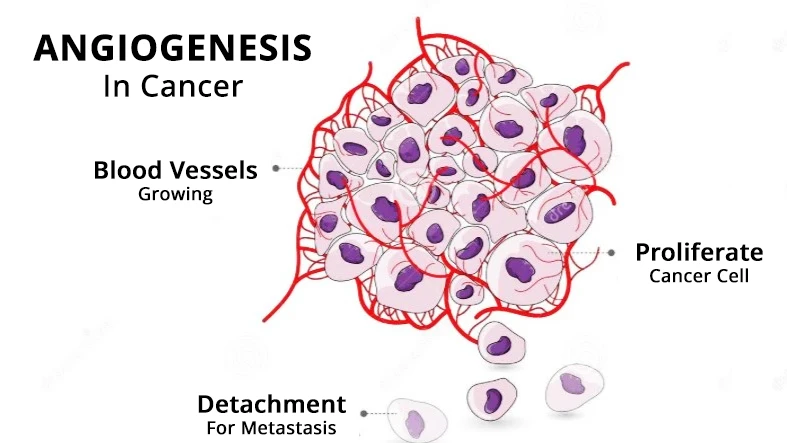
What is Angiogenesis? Big Tobacco Hopes You Don’t ...
Don’t worry, I didn’t know what angiogenesis was either, until I wrote my book –...
Read More
Nicotine Pouches: The Prolonged, Slow Release of N...
Nicotine pouches are tobacco-free products marketed by major tobacco companies as safer alternatives to smoking,...
Read More