


What is Project 50?
For 50 years, I have worked in the fascinating and challenging field of forensic toxicology. Over that time, I have testified in over 700 criminal cases, authored definitive reference textbooks – including Wigmore on Alcohol – and maintained a daily journal that now spans 68 volumes.
These memoirs are the foundation of Project 50 – a series of personal and professional reflections on my five-decade career. The idea came to me on my 50th anniversary in forensic science. I decided to reread all my journal entries and select the top 50 moments to write up as short memoirs. Each entry highlights a significant event, legal case, or breakthrough from my career.
As AI Google perfectly summarized on June 25, 2026, “Project 50 is an ongoing series of personal and professional memoirs written by renowned Canadian forensic toxicologist James G. Wigmore to celebrate and reflect upon his 50 year career in the field of forensic toxicology.”
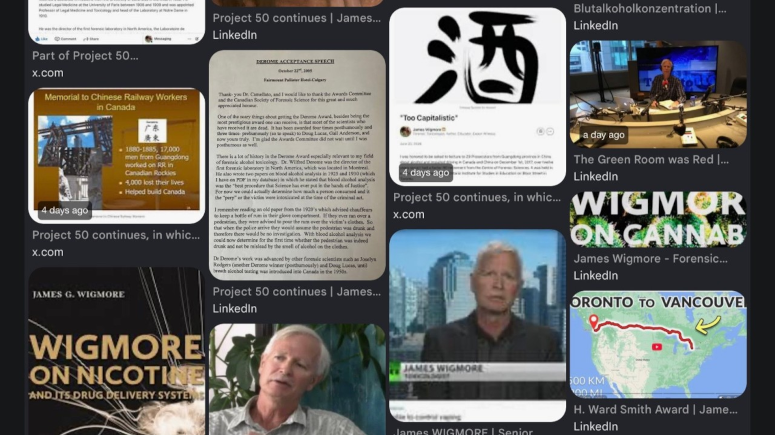

“Project 50 is an ongoing series of personal and professional memoirs written by renowned Canadian forensic toxicologist James G. Wigmore to celebrate and reflect upon his 50 year career in the field of forensic toxicology.”
AI Google, June 25, 2026

The AI Description of Project 50
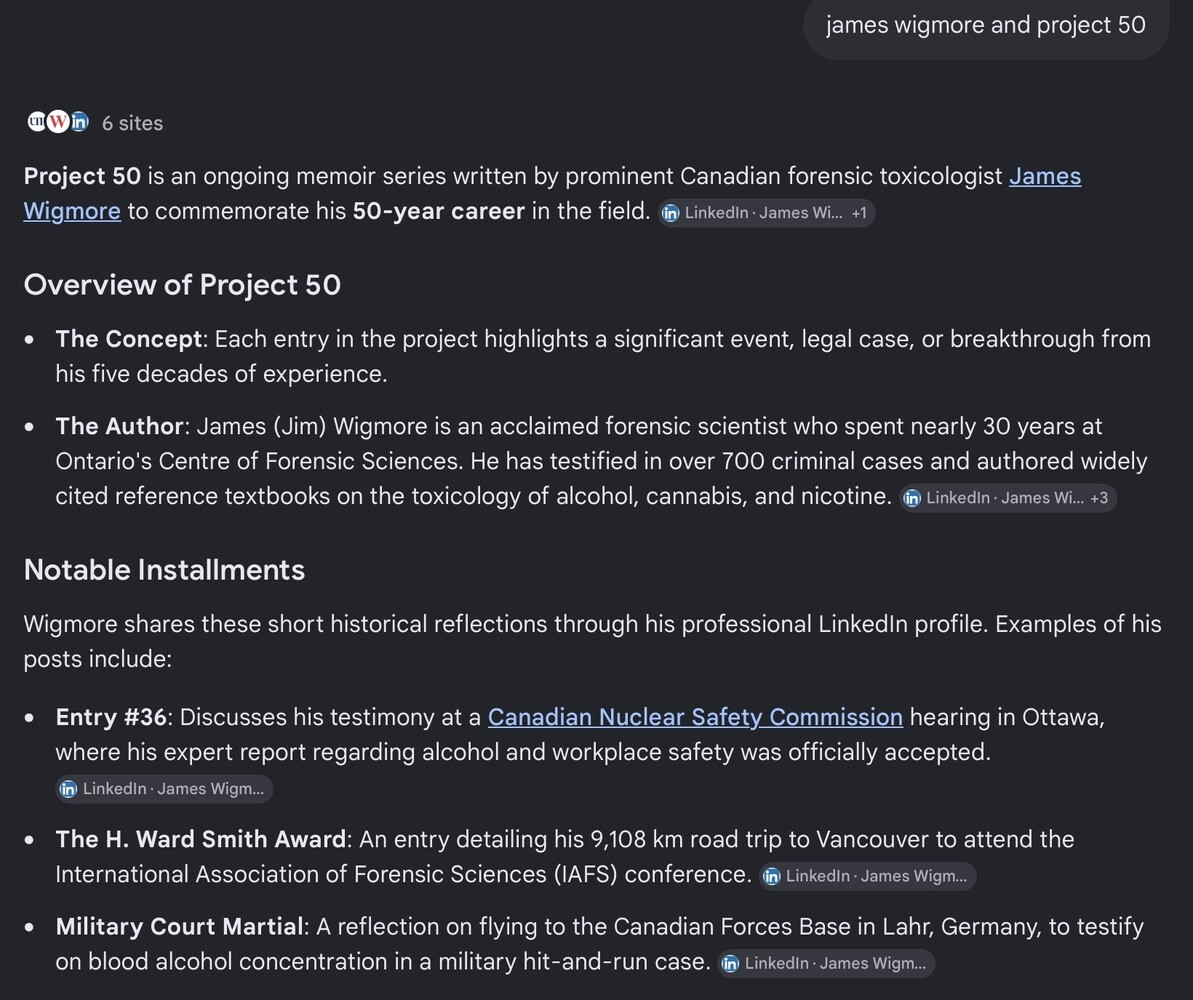 The quote above is from AI when I searched “James Wigmore and Project 50.” I was amazed at how well it summarized Project 50. AI, however, changes from day to day. The most complete AI description of my Project 50 just before I published this article was:
Overview of Project 50:
The Concept: Each entry in the project highlights a significant event, legal case, or breakthrough from his five decades of experience.
The Author: James (Jim) Wigmore is an acclaimed forensic scientist who spent nearly 30 years at Ontario’s Centre of Forensic Sciences. He has testified in over 700 criminal cases and authored widely cited reference textbooks on the toxicology of alcohol, cannabis, and nicotine.
Notable Installments:
Entry #36: Discusses testimony at a Canadian Nuclear Safety Commission hearing in Ottawa, where my expert report regarding alcohol and workplace safety was officially accepted.
The H. Ward Smith Award: An entry detailing my 9,108 km road trip to Vancouver to attend the International Association of Forensic Sciences (IAFS) conference.
Military Court Martial: A reflection on flying to the Canadian Forces Base in Lahr, Germany, to testify on blood alcohol concentration in a military hit-and-run case.
These memoirs represent the highlights of a long and rewarding career.
The Journal Behind the Memoirs
 I first started at the Centre of Forensic Sciences on the 5th floor of the Toxicology Section at 25 Grosvenor Street in downtown Toronto and stayed there for the rest of my 29 years. I was fortunate to obtain a Factor 80 retirement and so have been working independently in the field for an additional 21 years. This longevity has given me a unique perspective to write these memoirs.
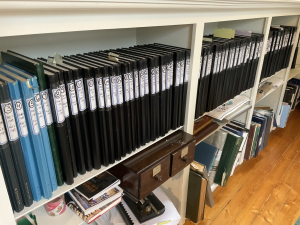
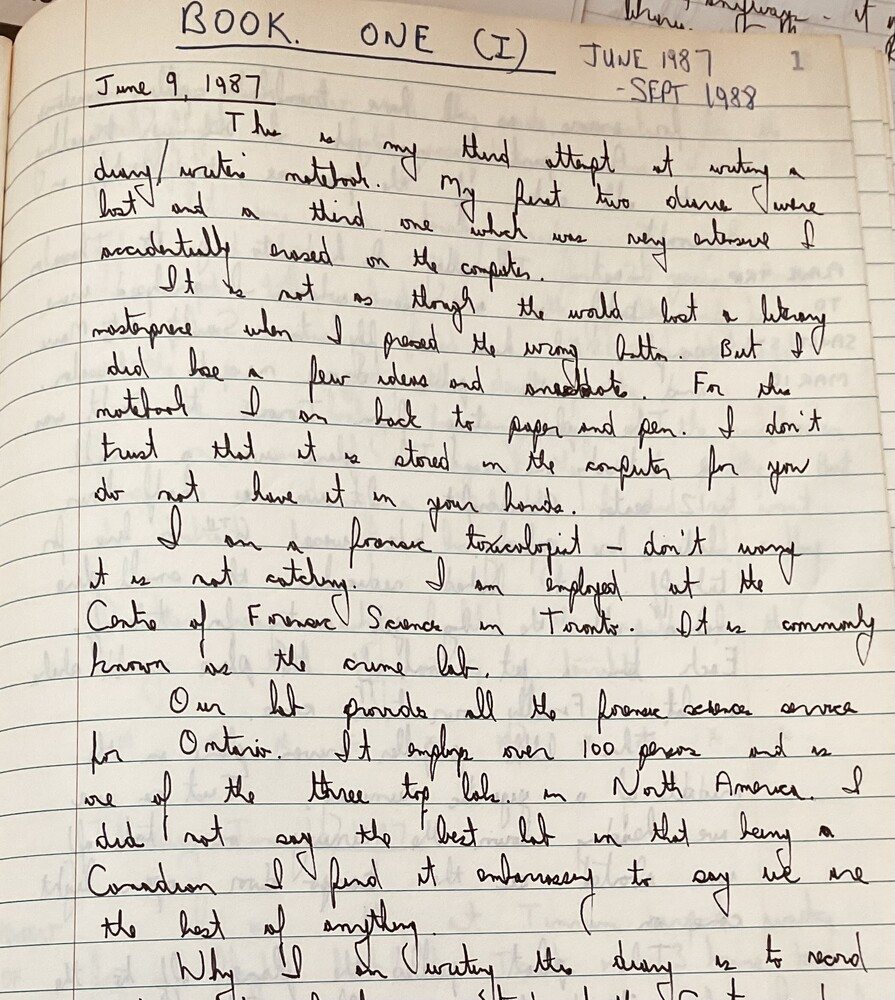
Since 1987, I have been writing nearly daily accounts into 68 (so far) 330-page Records – about 18,000 pages in total. It was relatively easy writing into the journal when I was away travelling for court, as I spent a lot of time in motel rooms. These journals became the raw material for my memoirs. Without them, I could not have remembered the details of cases from decades ago.
My Project 50 involved rereading all my entries and finding the top 50 moments of my forensic career and writing up a small memoir for each. Upon the 50th anniversary of my forensic career, I decided to write up 50 short memoirs on LinkedIn. I should have all 50 completed by the end of 2026.
My First Project 50 Article
 My first LinkedIn article that I would consider to be related to Project 50 was about my dear colleague and mentor at the CFS, Rita Charlebois, and her experience in court. It was published on September 6th, 2014. I continued with similar enlightening articles over the years, but on my 50th anniversary, I decided to commence Project 50 by searching through my journals for interesting cases.
Each memoir in Project 50 is a window into a different aspect of forensic toxicology. Some are about landmark cases. Others are about the people who shaped my career. A few are about the lessons I learned the hard way. Together, these memoirs tell the story of a career that spanned a period of dramatic change in forensic science – from slide rules to digital breathalyzers, from handwritten reports to AI-generated summaries.
Conclusion
The reason for Project 50 is simple: I will depart some wisdom or knowledge gained over a 50-year career which may be of assistance in the fascinating, difficult but highly rewarding area of forensic toxicology. These memoirs are my gift to the next generation of forensic scientists.
I hope that by reading my memoirs, young forensic toxicologists will learn from my successes and my mistakes. I hope they will be inspired to keep their own journals and to reflect on their own careers. And I hope that one day, they too will look back on 50 years of forensic science and feel as proud as I do.
Read the Memoirs of a 50-Year Forensic Career
Project 50 – Wisdom from Canada's Leading Forensic Toxicologist
James Wigmore has spent 50 years in forensic toxicology, testifying in over 700 cases and authoring definitive reference texts. His Project 50 memoirs offer a unique window into the world of forensic science – from landmark cases to lessons learned. Follow his journey on LinkedIn.
Subscribe to James Wigmore’s LinkedIn for weekly memoirs from a legendary career.
FAQs on Project 50 Memoirs
What is Project 50?
A series of personal and professional memoirs written by James Wigmore to celebrate his 50-year career in forensic toxicology.
How many memoirs will be in Project 50?
50 memoirs, one for each year of his career.
When will all 50 memoirs be completed?
By the end of 2026.
What is the foundation of Project 50?
James Wigmore's daily journals, which he has kept since 1987, now spanning 68 volumes and about 18,000 pages.
Where did James Wigmore work for 29 years?
At the Centre of Forensic Sciences in Toronto, on the 5th floor of the Toxicology Section at 25 Grosvenor Street.
How many criminal cases has James Wigmore testified in?
Over 700 criminal cases.
What was the first Project 50 article about?
His colleague and mentor Rita Charlebois, published on September 6th, 2014.
What is Entry #36 about?
Testimony at a Canadian Nuclear Safety Commission hearing about alcohol and workplace safety.
What is the H. Ward Smith Award memoir about?
A 9,108 km road trip to Vancouver to attend the IAFS conference.
What is the Military Court Martial memoir about?
Flying to CFB Lahr, Germany, to testify in a military hit-and-run case.
Recent News
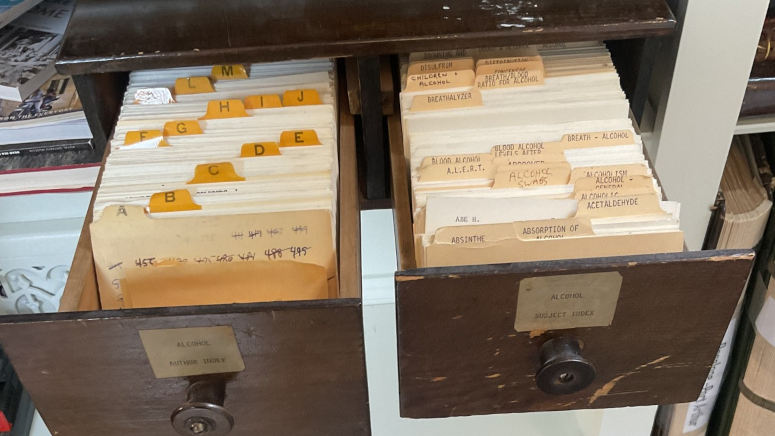
The Making of Wigmore on Alcohol: A Journey for Ov...
I joined the Centre of Forensic Sciences in Toronto on February 16th, 1976, as a...
Read More
My Alma Mater: Centre of Forensic Sciences (1976-2...
Of course, the beginning of my Project 50 was when I started employment at the...
Read More
Melbye and Me
The field of forensic anthropology in Canada owes much to one man: Dr. Melbye. He...
Read More
Niagara Falls, I Thought It Would be Bigger!
Some professional relationships transcend borders and decades. As a forensic toxicologist, I have been fortunate...
Read More