


My Alma Mater: Centre of Forensic Sciences (1976-2005)
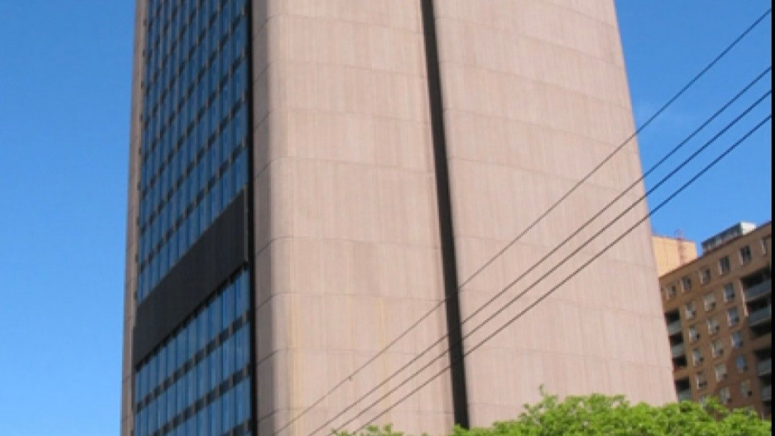
Of course, the beginning of my Project 50 was when I started employment at the prestigious Centre of Forensic Sciences (CFS) in Toronto on February 16th, 1976. Before I joined the CFS, I did not know what forensic science was or where the CFS was situated. Its location in an office building at 25 Grosvenor Street was just several blocks away from the University of Toronto. In the truest sense, the CFS became my alma mater – the nurturing institution that shaped my entire career.
Merriam Webster defines an alma mater as “a nurturing educational institution where a person studied.” Although the CFS was not an academic institution and did not grant degrees, it was my true alma mater or nourishing mother, responsible for my wonderful 50-year career in the field of forensic toxicology.

Alma mater: A nurturing educational institution where a person studied.
Merriam Webster

George Cimbura
The Toxicology Section Head at the time of my job interview was George Cimbura. He was actually an Olympic downhill skier who escaped communist Czechoslovakia to start a new life in Canada. He was a bit paranoid about communist agents and was one of the few, rare Canadians who had a licence to own a handgun.
I was advised of the job by Employment Canada and told not to emphasize my university education, which was 2 years of an Honours BSc degree at the University of Toronto. The job was that of a junior technician repairing all the Borkenstein Breathalyzers used by the police in Ontario. It initially paid less than I was receiving on unemployment insurance. Yet this was the beginning of my alma mater experience.
How Do You Dilute Concentrated Sulphuric Acid?
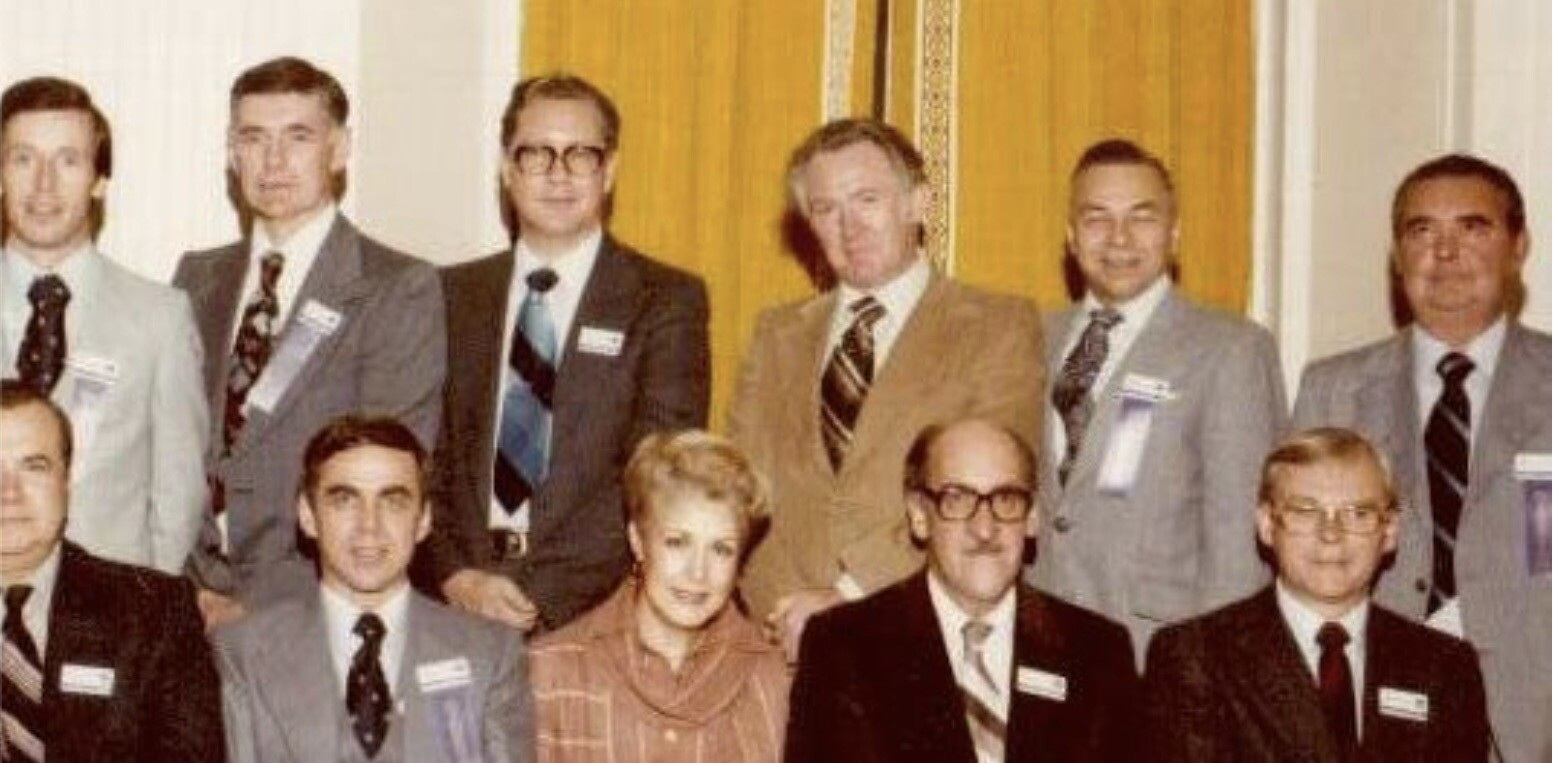 George Cimbura was a calm, reassuring person who spoke perfect English with a Czech accent. After some pleasantries, he asked a serious question: “How do you dilute concentrated sulphuric acid?”
Little did I realize that my 50-year career depended on the correct answer. So I explained how you would wear protective equipment and dilute the sulphuric acid in a fume hood, pouring the concentrated sulphuric acid slowly into a flask of distilled water, ensuring that it did not overheat.
George scratched his neck thoughtfully and said, “You’re hired, when can you start?”
That single question and answer launched my career at my alma mater.
God Save the Queen!
And so, one week later, on February 16th, 1976, I attended the Centre of Forensic Sciences and then immediately had to go to a room at the Ontario Parliament at Queen’s Park. In the room I was greeted by a serious older man who asked me if I knew what an oath was and what it meant.
I then swore an oath to Queen Elizabeth II that I would be a good civil servant and serve her faithfully and loyally. I then returned to 25 Grosvenor Street for more processing and where I would work for the next 29 years. My alma mater had officially welcomed me.
History of the Centre of Forensic Sciences
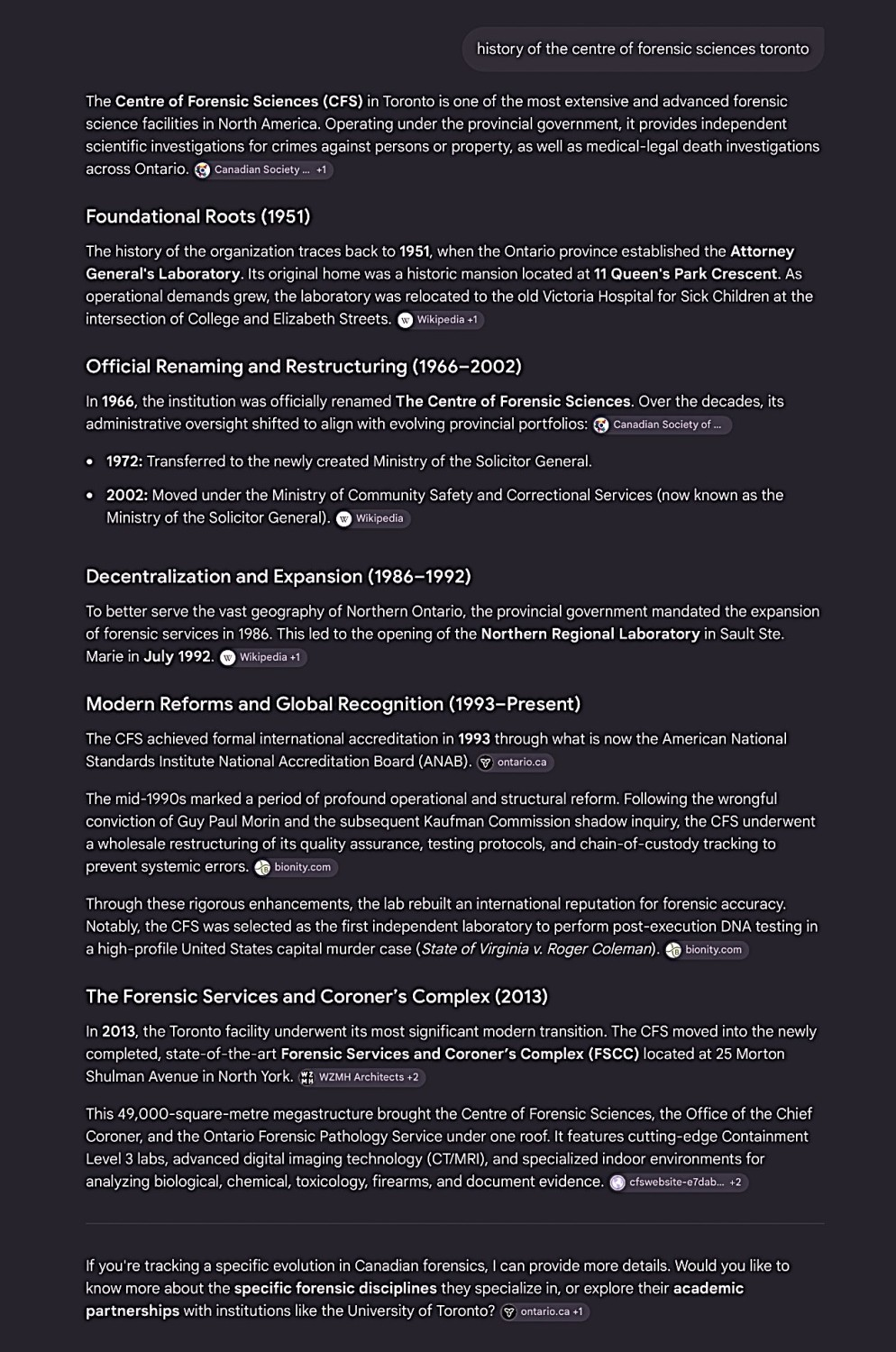
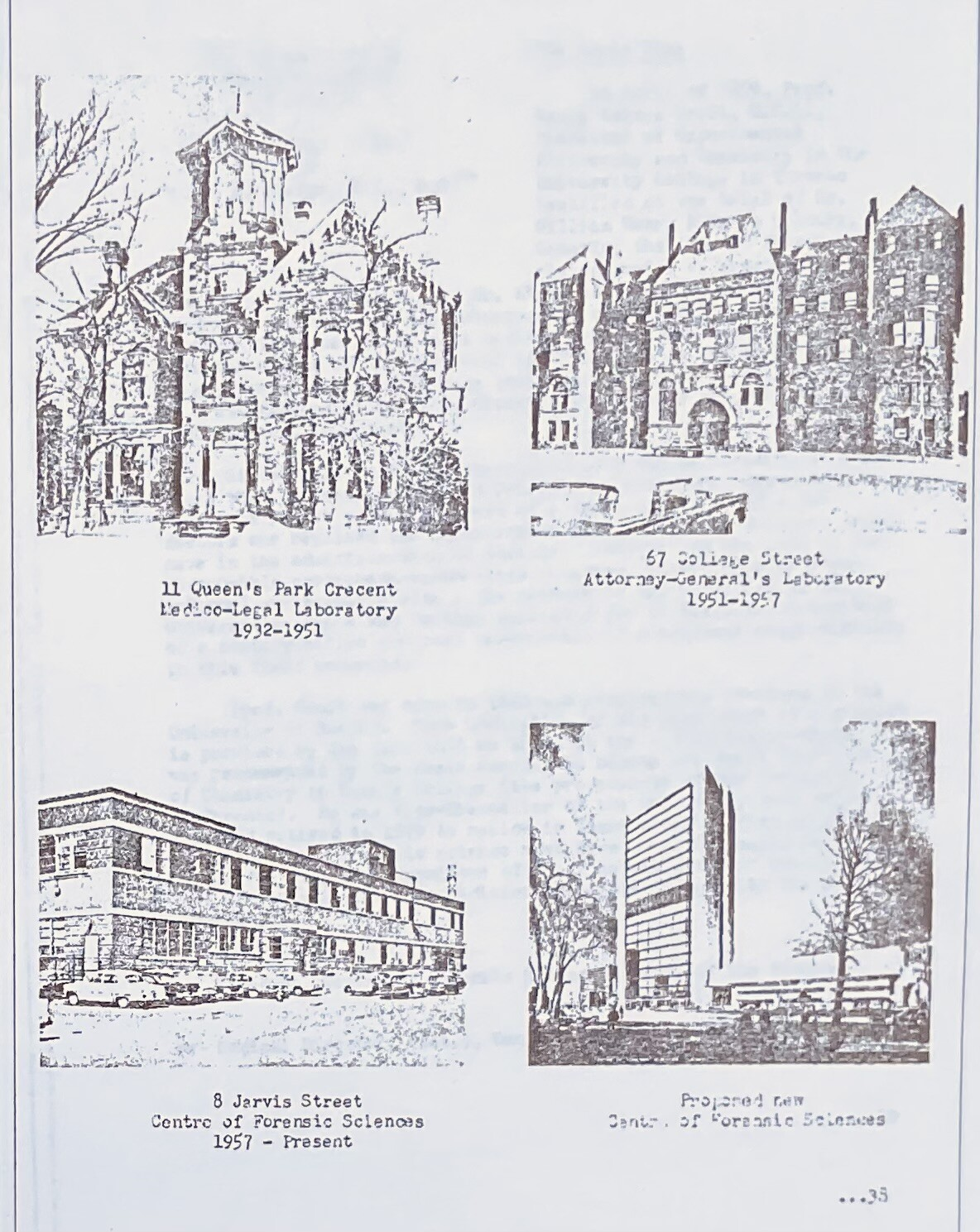 According to an AI search summary, the Centre of Forensic Sciences (CFS) in Toronto is one of the most extensive and advanced forensic science facilities in North America. The history of the organization traces back to 1951, when Ontario established the Attorney General’s Laboratory in a historic mansion at 11 Queen’s Park Crescent.
In 1966, the institution was officially renamed the Centre of Forensic Sciences. It later expanded to Sault Ste. Marie in 1992, achieved international accreditation in 1993, and moved to the state-of-the-art Forensic Services and Coroner’s Complex in North York in 2013.
My alma mater had grown from a mansion on Queen’s Park Crescent to one of the most advanced forensic facilities in the world.
George Cimbura (continued)
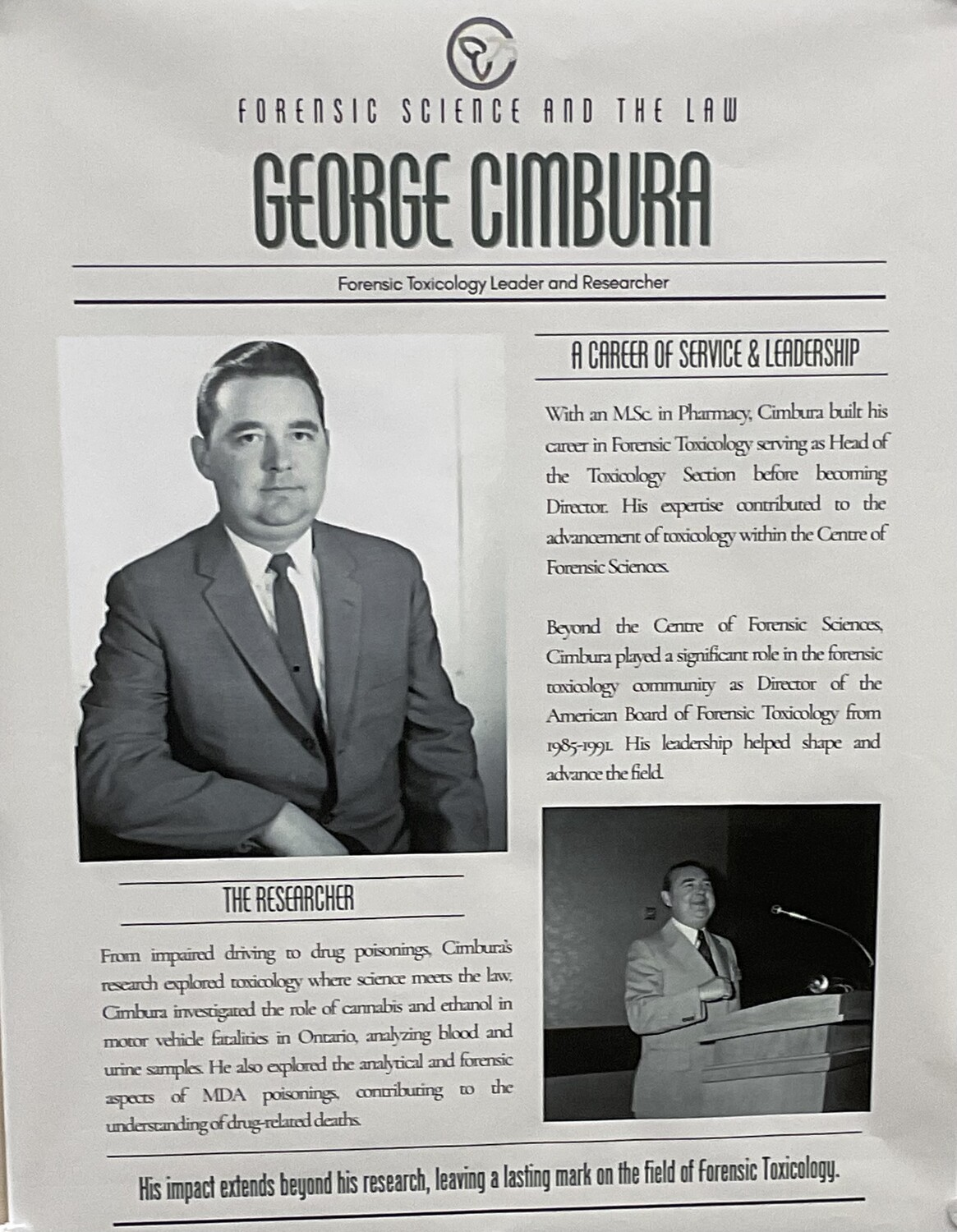 I felt that George Cimbura, or Mr. Cimbura as you always called him, was a fair and kind Section Head. He treated everyone, no matter if they were a junior technician or senior scientist, with respect and consideration. In my opinion, he was the best Toxicology Section Head that I had over my 29 years at the lab. He always brought a nice caviar dish for the toxicology Christmas lunches. He eventually became a deputy Director and then for a few years the Director of the Centre of Forensic Sciences when Doug Lucas retired.
With an MSc in Pharmacy, Cimbura built his career in forensic toxicology, serving as Head of the Toxicology Section before becoming Director. His expertise contributed to the advancement of toxicology within the Centre of Forensic Sciences. Beyond the CFS, Cimbura played a significant role in the forensic toxicology community as Director of the American Board of Forensic Toxicology from 1985–1991. His leadership helped shape and advance the field.
From impaired driving to drug poisonings, Cimbura’s research explored toxicology where science meets the law. He investigated the role of cannabis and ethanol in motor vehicle fatalities in Ontario, analysing blood and urine samples. He also explored the analytical and forensic aspects of MDA poisonings. His impact extends beyond his research, leaving a lasting mark on the field of forensic toxicology – and on his junior technician who would one day write these words.
Conclusion
Although the Centre of Forensic Sciences was not an academic institution and did not grant degrees, it was my true alma mater or nourishing mother, which was responsible for my wonderful 50-year career in the field of forensic toxicology. I arrived as a junior technician with two years of university education. I left 29 years later as a senior toxicologist, an author, and an expert witness in over 700 criminal cases. Everything I know, I owe to my alma mater.
References
Contact a Forensic Expert Trained at Canada's Premier Forensic Laboratory
Consult Canada's Leading Forensic Toxicologist
James Wigmore spent 29 years at the Centre of Forensic Sciences, his true alma mater. With 50 years of experience, over 700 criminal cases, and authorship of Wigmore on Alcohol, he provides expert insight into forensic toxicology for legal professionals.
Contact James Wigmore TodayPut 50 years of forensic expertise on your side. Reach out now for expert consultation.
FAQs on the Centre of Forensic Sciences as an Alma Mater
What is an alma mater?
A nurturing educational institution where a person studied, according to Merriam Webster. James Wigmore considers the Centre of Forensic Sciences his alma mater.
When did James Wigmore start at the Centre of Forensic Sciences?
On February 16th, 1976, as a junior technician repairing Borkenstein Breathalyzers.
What was James Wigmore's first job at the CFS?
He was a junior technician repairing all the Borkenstein Breathalyzers used by police in Ontario.
Who interviewed James Wigmore for his first job?
George Cimbura, the Toxicology Section Head at the time.
Who was George Cimbura?
An Olympic downhill skier who escaped communist Czechoslovakia and became the Toxicology Section Head, later Deputy Director and Director of the CFS.
When was the Centre of Forensic Sciences founded?
The organization traces back to 1951, when Ontario established the Attorney General's Laboratory.
When was it renamed the Centre of Forensic Sciences?
In 1966.
How long did James Wigmore work at the Centre of Forensic Sciences?
29 years, from 1976 to 2005.
What did George Cimbura research?
The role of cannabis and ethanol in motor vehicle fatalities in Ontario, and the analytical and forensic aspects of MDA poisonings.
Recent News
My Alma Mater: Centre of Forensic Sciences (1976-2...
Of course, the beginning of my Project 50 was when I started employment at the...
Read More
Melbye and Me
The field of forensic anthropology in Canada owes much to one man: Dr. Melbye. He...
Read More
Niagara Falls, I Thought It Would be Bigger!
Some professional relationships transcend borders and decades. As a forensic toxicologist, I have been fortunate...
Read More
What is Project 50?
For 50 years, I have worked in the fascinating and challenging field of forensic toxicology....
Read More