


The Three-Headed Hydra at Work: Which Drug Poses the Highest Workplace Injury Risk?
Workplace injury prevention requires understanding which substances actually increase accident risk. The three most destructive legal drugs in the world are nicotine, alcohol, and cannabis, yet their relative risks for workplace injury vary dramatically according to forensic science research.

Understanding Legal Drug Risks in the Workplace
These three legal substances—nicotine, alcohol, and THC from cannabis—form what forensic toxicologists call the “three-headed hydra” of workplace drug concerns. Each substance affects the body differently, with distinct pharmacological properties, detection windows, and impairment profiles.
The following table lists some of the features of these drugs, providing context for understanding their workplace safety implications.
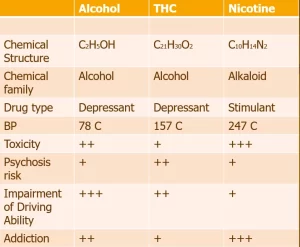 However, what the table doesn’t list is which of these drugs have the greatest risk for workplace accidents —a question that Canadian research has definitively answered through large-scale population analysis.
The Science Behind Workplace Injury Statistics
A comprehensive cross-sectional analysis was conducted of 136,536 working participants, of which 2,577 (2%) had a work-related injury in the past year. The study used the Canadian Community Health Survey between 2013 and 2016, providing robust data on actual workplace injury patterns across diverse employment sectors.
This research represents one of the most extensive examinations of legal drug use and workplace injury risk ever conducted. The sample size and methodology allow forensic scientists to draw evidence-based conclusions about which substances genuinely increase workplace injury risk versus those stigmatized without scientific justification.
Of those who had a workplace-related injury, 4% had used cannabis more than once in the past year but found no evidence that cannabis users experienced higher rates of work-related injuries. This finding challenges common assumptions about cannabis and workplace safety.
Nicotine's Impact on Workplace Injury Rates
The odds ratio of a workplace injury revealed striking differences between substances:
Current smoking (nicotine): 1.31 (1.20-1.43) Frequent alcohol use: 1.01 (0.90-1.14) Cannabis use: 0.81 (0.66-0.99)
Nicotine users demonstrated a statistically significant 31% increased risk of occupational injury compared to non-users. This elevation in work-related injury risk substantially exceeds that of the other legal substances examined, making tobacco smoking the highest-risk legal drug for workplace accidents.
Several mechanisms may explain nicotine’s association with elevated workplace injury rates:
- Smoking breaks disrupting workflow and concentration
- Reduced physical fitness and respiratory function affecting job performance
- Nicotine withdrawal symptoms between smoking sessions
- Fire and burn hazards in certain workplace environments
- Vascular effects potentially affecting reaction time and coordination
Forensic toxicology expertise from scientists like James Wigmore helps organizations understand these complex relationships between substance use and workplace safety outcomes.
Cannabis Use and Workplace Safety: What Research Shows
Perhaps most surprisingly, the research found cannabis use associated with slightly lower workplace injury rates than the general population. The odds ratio of 0.81 indicates cannabis users were actually 19% less likely to experience workplace injury than non-users during the study period.
This doesn’t mean cannabis use prevents workplace injury—correlation doesn’t imply causation. However, it definitively demonstrates that cannabis use doesn’t increase workplace injury risk in the general working population. This evidence-based finding should inform workplace drug testing policies and employment decisions.
The authors concluded: “In conclusion, we found that workers reporting using cannabis more than once in the past year were no more likely to report having experienced a work-related injury over the same time period in a large cohort of the Canadian working population.“
Evidence-Based Workplace Drug Policies
The research team emphasized the need for balanced, risk-based workplace policies: “Occupational medicine physicians and organizations should consider taking a risk-based yet balanced approach in drafting cannabis-related workplace policies given the limited evidence informing on the issue of cannabis use and work-related injury.”
Organizations concerned about workplace injury prevention should prioritize evidence-based interventions:
- Implement smoking cessation programs targeting the highest-risk substance
- Continue alcohol testing protocols given alcohol’s established impairment effects
- Avoid punitive cannabis policies unsupported by workplace injury data
- Focus safety resources on documented risk factors rather than stigmatized substances
- Consult forensic toxicology experts for scientifically sound policy development
James Wigmore’s extensive forensic toxicology experience, including testimony in over 700 cases and peer-reviewed research on THC, nicotine, and alcohol, provides the scientific foundation for understanding these workplace injury relationships. His expertise helps organizations develop policies that genuinely enhance safety rather than perpetuate unfounded assumptions.
However, further prospective studies are needed in this area to shed light on this issue, as the authors acknowledged. Workplace injury prevention remains an evolving field requiring ongoing research and expert interpretation.
Reference
Workplace Injury FAQs
Which legal drug has the highest workplace injury risk?
Nicotine shows the highest workplace injury risk among legal drugs, with current smokers demonstrating a 31% increased risk compared to non-smokers. This exceeds the workplace injury risk of both alcohol and cannabis.
Does cannabis use increase workplace injury rates?
No. Research analyzing 136,536 Canadian workers found no evidence that cannabis users experienced higher rates of work-related injuries. Cannabis users actually showed slightly lower injury rates than the general working population.
What was the odds ratio for workplace injury and smoking?
Current smokers had an odds ratio of 1.31 for workplace injury, indicating a statistically significant 31% increased risk compared to non-smokers in the Canadian Community Health Survey analysis.
Should employers focus drug testing on cannabis or nicotine?
Evidence suggests employers concerned about workplace injury prevention should prioritize smoking cessation programs over cannabis testing, as nicotine demonstrates the highest documented workplace injury risk among legal substances.
How many workers were studied in the cannabis workplace injury research?
The cross-sectional analysis examined 136,536 working participants from the Canadian Community Health Survey between 2013 and 2016, with 2,577 reporting workplace injuries.
What did forensic toxicologists conclude about cannabis and workplace safety?
Forensic science research concluded that cannabis users were no more likely to experience workplace injuries than non-users. Experts recommend risk-based, balanced workplace policies informed by evidence rather than assumptions.
Does alcohol increase workplace injury risk?
The research found frequent alcohol use had an odds ratio of 1.01 for workplace injury, indicating no statistically significant increase in injury risk in the general working population study.
Why might nicotine increase workplace injury rates?
Potential mechanisms include smoking breaks disrupting concentration, reduced physical fitness affecting job performance, nicotine withdrawal symptoms, fire hazards, and vascular effects on reaction time and coordination.
Should workplace drug policies change based on this research?
Occupational medicine experts recommend organizations adopt risk-based approaches to workplace drug policies, prioritizing documented injury risks like nicotine over substances lacking evidence of increased workplace injury rates.
What role do forensic toxicologists play in workplace safety?
Forensic toxicologists like James Wigmore provide scientific expertise interpreting drug testing results, analyzing workplace injury data, and developing evidence-based policies that genuinely enhance safety rather than perpetuate unfounded assumptions.
Recent News

Carbon Monoxide and Ghosts
Carbon monoxide(CO) has been an ancient, silent enemy of humans for thousands of years. Its...
Read More
Nicotine as a Chemical Weapon?
E cigarette liquid nicotine is not just a vaping product—it is one of the most potent...
Read More
Impaired Driving Cases: Rats Don’t Drive
Impaired driving prosecutions require expert testimony grounded in human physiology, not animal studies. Occasionally humour...
Read More
Is Vaping Safe, or is It Just Bait and Switch from...
The pressing health question for our time—is vaping safe?—takes centre stage at the Toronto Public...
Read More