


Oral Fluid Screening and Blood Tests for THC in Suspected Cannabis-Impaired Drivers
The legalization of cannabis in Canada in 2018 created an urgent need for reliable, roadside tools to detect impaired driving. The oral fluid drug test has emerged as the frontline solution. A pivotal 2024 validation study now provides robust, data-driven evidence for this screening method, demonstrating its high accuracy in predicting illegal blood THC concentrations. This analysis offers essential insights for law enforcement, legal professionals, and workplace safety officials evaluating the real-world reliability of the oral fluid drug test as a practical enforcement tool.
Table of Contents
The Study: Validating Roadside Screening Tools for Modern Enforcement
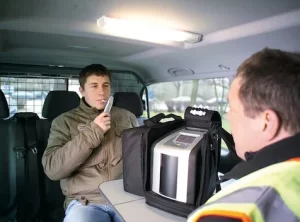 The research, published in the Journal of Analytical Toxicology, directly evaluated the field performance of Canada’s Approved Drug Screening Equipment (ADSE). Following legalization, law enforcement required a scientifically valid tool to identify drivers likely exceeding the strict per-se blood THC limits of 2 ng/mL and 5 ng/mL. The approved Drager DrugTest 5000 and Abbott SoToxa devices use an oral fluid drug test with a standardized cutoff of 25 ng/mL THC to provide the necessary grounds for further action.
Core Methodology & Driver Profile:
 The study’s strength lies in its analysis of real-world data from 230 drivers who screened positive at the roadside. Key procedural and demographic details include:
- A confirmatory blood sample was collected an average of 1.4 hours later for precise laboratory analysis using UPLC-MS-MS, the forensic gold standard.
- Most stops were for observable traffic infractions like speeding (43.8%) or routine spot-checks (21.7%), demonstrating that cannabis-impaired driving is not always visibly obvious.
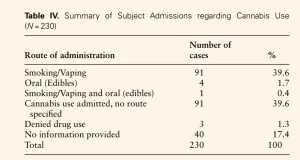
A significant majority (81%) of drivers admitted to recent cannabis use when confronted with a positive screen, adding behavioural context to the chemical evidence.
Compelling Results: A High Correlation Confirmed
The findings offer powerful, quantitative support for the oral fluid drug test as a reliable indicator. Critically, this high correlation held despite the inherent delay between the roadside screen and the blood draw:
- 90% Correlation: Nine out of ten drivers who failed the oral screen had a subsequent blood THC level at or above the 2 ng/mL legal limit.
- 70% Correlation: Seven out of ten tested at or above the stricter 5 ng/mL limit, which carries more severe penalties.
These results decisively validate the oral fluid drug test as a highly effective real-time filter. The data strongly indicates that a positive roadside result is a probable indicator of both recent use and a blood concentration likely to be illegal, not a mere trace detection.
Implications for Law Enforcement and Legal Thresholds
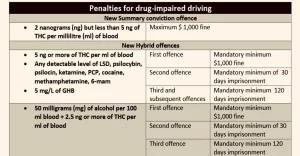 The study’s conclusions provide clear, actionable guidance for 2024 enforcement strategies. A positive oral fluid drug test provides a scientifically backed, practical basis for forming the “reasonable grounds” required under Canadian law to demand an evidentiary blood test. This procedural step is crucial because the blood test result—not the oral fluid screen—serves as the primary evidence for a per-se criminal offence.
For officers in the field, this validation translates to:
- Operational Efficiency: The screen allows for quicker, more confident decision-making at the roadside.
- Enhanced Objectivity: It provides an empirical, numerical result that supplements traditional physical sobriety observations.
Legal Defensibility: The documented 90% correlation rate supports the test’s use in court to justify the subsequent blood draw, strengthening the chain of evidence.
Broader Context: Beyond the Traffic Stop
The proven reliability of the oral fluid drug test has significant implications beyond roadside traffic enforcement. Its non-invasive nature and validated accuracy make it a compelling tool for other safety-sensitive scenarios:
- Post-Incident Workplace Testing: For investigations in industries like transportation, construction, or manufacturing following an accident or near-miss.
- Reasonable-Cause Screening: Enabling employers in jurisdictions where permitted to test based on specific, articulable observations of impairment.
- Deterrence and Safety Culture: Providing a visible, evidence-based tool that reinforces a company’s commitment to a drug-free workplace, aligning field screening with forensic confirmation.
The 2024 study solidifies the role of the oral fluid drug test as a key component in a modern, science-based framework for deterring and detecting cannabis impairment across multiple domains of public and occupational safety.
Reference
Challenge the Science: Examine Oral Fluid Test Evidence
Forensic Analysis of Roadside THC Screening Reliability
The 2024 validation study promotes oral fluid tests as reliable, but forensic science requires rigorous, case-specific scrutiny. James Wigmore’s unparalleled toxicology expertise—forged over 29 years at the Centre of Forensic Sciences—provides the critical lens needed to challenge these results. His team analyzes the methodology, the delay between screen and blood draw, individual physiology, and the vast catalogue of THC studies to identify vulnerabilities in the prosecution’s claims. Use this deep forensic knowledge to defend your rights.
Challenge Your Test ResultsA positive roadside screen is not a conviction. The correlation study has limitations that a seasoned forensic expert can exploit in your defense. Don’t let a single test determine your future. Contact us for a confidential case assessment.
FAQs: Oral Fluid Drug Tests for THC
What is the THC cutoff for a roadside oral fluid drug test in Canada?
The Approved Drug Screening Equipment (ADSE) uses a cutoff concentration of 25 nanograms per milliliter (ng/mL) of THC in oral fluid.
How accurate is a positive oral fluid test at predicting illegal blood THC levels?
The 2024 study found that 90% of drivers who tested positive on the oral screen later had a blood THC level at or above the 2 ng/mL legal limit.
What happens after a driver fails a roadside oral fluid drug test?
A positive test provides police with grounds to demand a blood sample, which is analyzed in a forensic laboratory to obtain an exact THC concentration for legal evidence.
Which devices are approved for use in Canada?
The Drager DrugTest 5000 and the Abbott SoToxa are the approved devices for roadside oral fluid drug test screening.
Why is there a time gap between the oral test and the blood test?
Blood samples are typically drawn at a police station or hospital, not at the roadside. The study accounted for an average delay of 1.4 hours.
Do drivers admit to use when they test positive?
In this study, the majority of drivers (81%) who failed the oral fluid drug test admitted to recent cannabis use.
What was the main traffic reason for stops in the study?
The most common reason was various traffic infractions, such as speeding, which accounted for 43.8% of stops.
Recent News
Cannabis and Alcohol and Driving: 1+1 =3?
When it comes to driving impairment, the combination of alcohol and cannabis is far more dangerous than...
Read More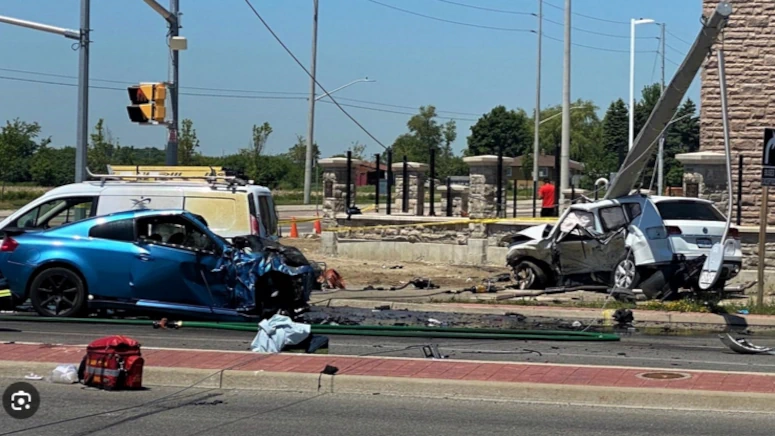
A Tragic Cannabis-Related Fatal Motor Vehicle Coll...
A sunny June afternoon. A minivan stopped at a red light. Inside: a mother and...
Read More
Cannabis, Alcohol and Suicide
Does daily cannabis use put your mental health at risk? New forensic research reveals a...
Read More
The Myth of “Next Day” Effects After S...
The debate about impairment after smoking cannabis often extends into the next day. A rigorous...
Read More