


A Tragic Cannabis-Related Fatal Motor Vehicle Collision
A sunny June afternoon. A minivan stopped at a red light. Inside: a mother and her three young daughters. Then, at 135 km/h, everything ended. This is the reality of driving while impaired by cannabis.
Fatal Motor Vehicle Collision
 On a nice sunny day, Thursday June 18th, 2020, shortly after noon, a blue Infiniti G35 driven by 20 year old Brady Robertson, crashed at approximately 135 km/h (speed limit, 70 km/h) into a stopped white Volkswagen Atlas driven by thirty-six year old Karolina Ciasullo. The white Volkswagen SUV then crashed into a cement hydro pole that crumbled its roof. The driver, Karolina Ciasullo and her 3 daughters, Klara (6 years old), Lilianna (3 years old) and 1 year old Mila, were all killed.
This devastating crash illustrates the worst possible outcome of driving while impaired by cannabis. A family of four – a mother and her three young children – erased in an instant because a driver chose to get behind the wheel after consuming THC.
The Driver: A History of Reckless Behaviour
The driver Brady Robertson had no driver’s license at the time of the fatal collision. He had been convicted of dangerous driving just 2 days before this fatal MVC. Despite this recent conviction, he was back on the road, again driving dangerously. He was taken to hospital and survived.
A blood sample collected approximately 1 hour after the collision showed his blood tetrahydrocannabinol (THC) concentration to be 40 nanograms of THC per millilitre of blood (ng/mL). Another blood sample taken about 2 hours later showed a blood THC of 15 ng/mL. For context, the legal blood THC limits in Canada are 2 to 5 ng/mL for a lesser charge and over 5 ng/mL for a more serious criminal charge. Robertson’s first reading was eight times the serious criminal limit.
Robertson’s lawyer challenged the 5 ng/mL THC limit as unconstitutional. This legal tactic attempted to undermine Canada’s driving while impaired laws, but ultimately failed.
Alcohol vs THC Impaired Driving: Key Differences
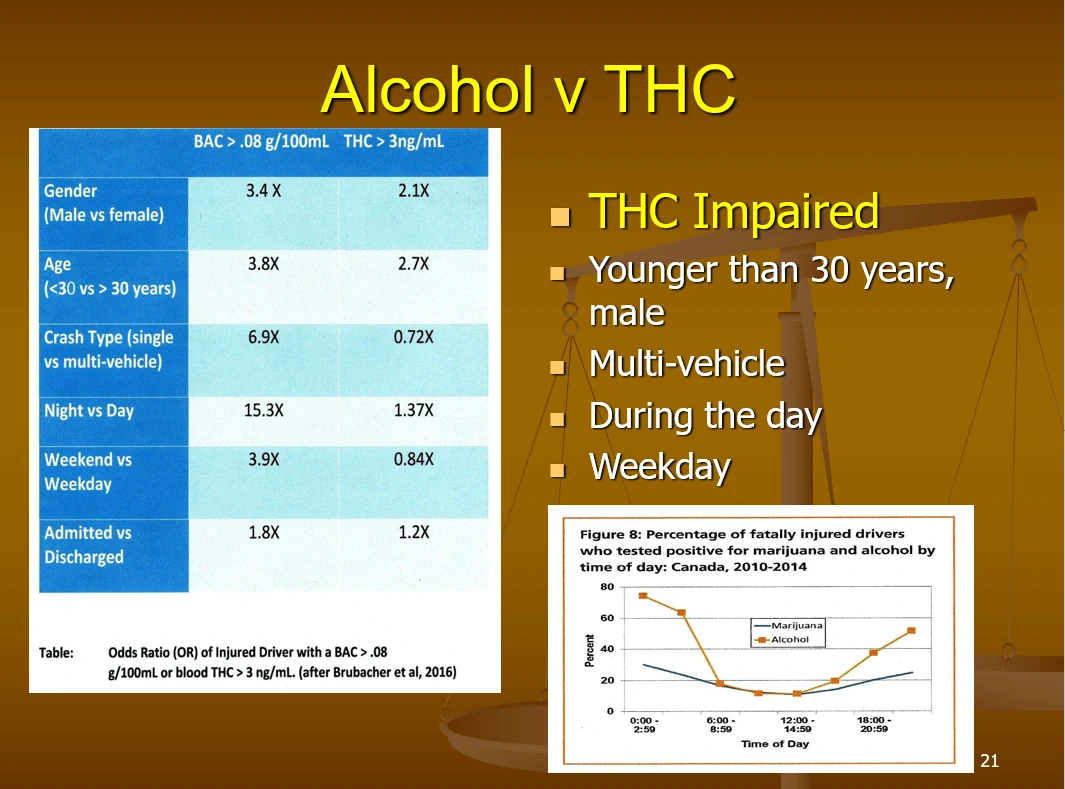 Both alcohol and THC cause impairment of driving ability, mainly due to their depressant effects. Both involve mainly younger male drivers. However, there are critical differences that every driver should understand:
Timing of collisions: Alcohol-related collisions occur mainly at night and on weekends. THC-related impaired driving collisions occur mainly on weekdays during the day.
Type of collisions: Alcohol-related crashes are mainly single motor vehicle collisions. THC-related crashes often involve multi-vehicle collisions – meaning more innocent victims.
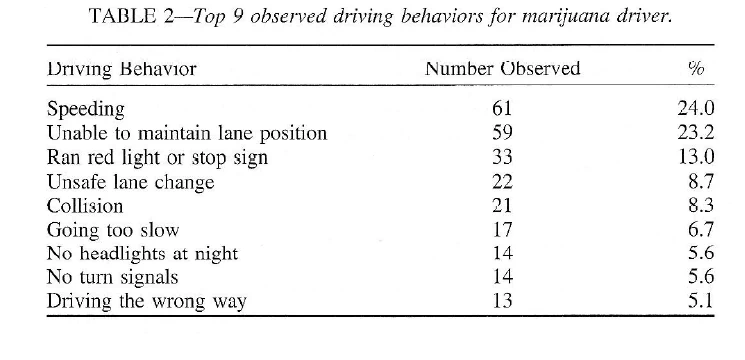
Driving behaviour: Only 6.7% of cannabis-impaired drivers were observed by the police to drive too slow. The majority drive aggressively and at excessive speeds.
Brady Robertson, who was driving while impaired, exhibited the top 5 driving behaviours observed by the police for marijuana drivers. He drove at nearly double the speed limit, crossed into oncoming traffic, and crashed into a stopped vehicle. This pattern of driving while impaired by cannabis is distinctly different from alcohol impairment and often more dangerous to other road users.
Conclusion: 5 ng/mL THC Limit Constitutional
 The judge ruled that the federal blood THC limit of 5 ng/mL was constitutional and stated:
“Based on the totality of factors I am entitled to consider; I am satisfied that the 5 ng/mL limit for THC had a dual purpose. The objective was to strengthen the pre-existing impaired driving laws and increase road safety by deterring cannabis users from getting behind the wheel of a car after having consumed cannabis.”
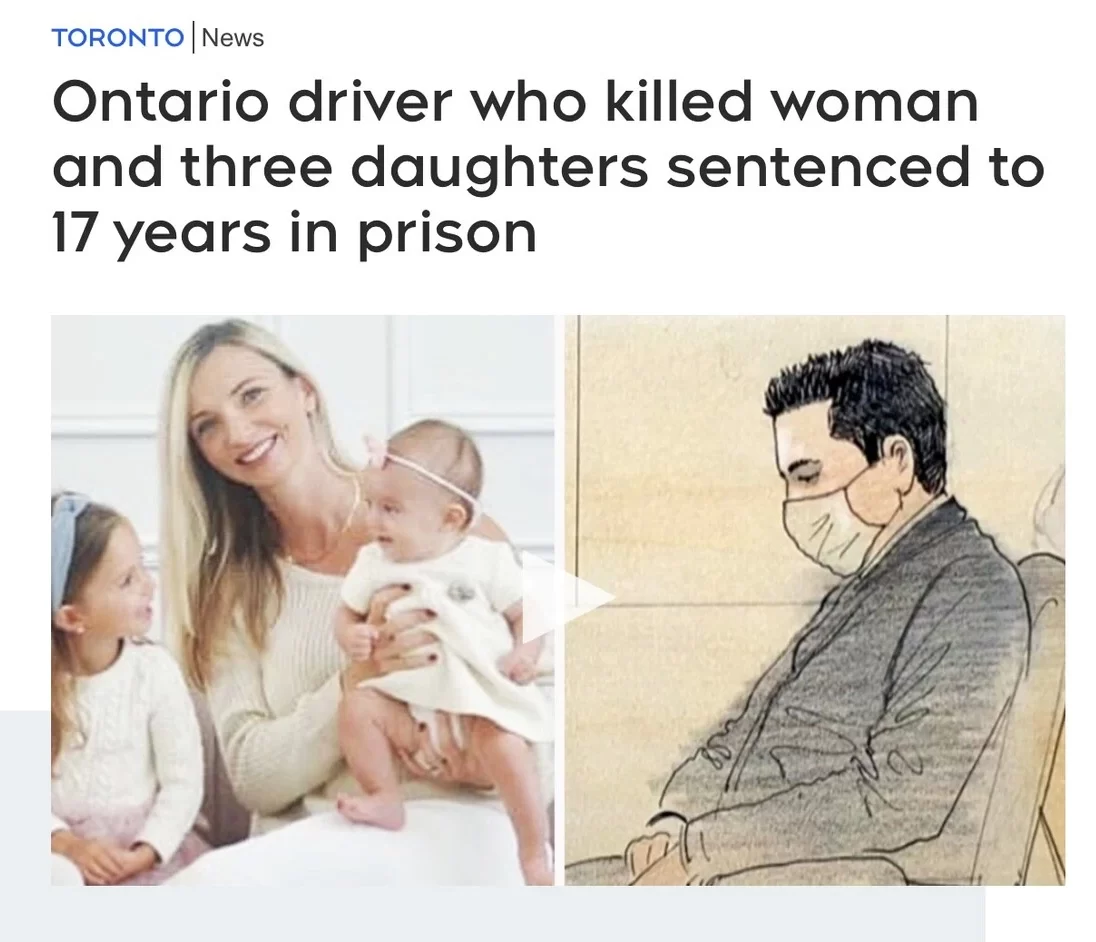
Justice Coponecchia convicted Brady Robertson to 17 years in jail, one of the steepest penalties for an impaired driving causing death case in Canada. This sentence sends a clear message: driving while impaired by cannabis will not be tolerated, especially when it results in the deaths of innocent children.
The tragic loss of Karolina, Klara, Lilianna, and Mila Ciasullo could have been prevented. Robertson chose to drive while impaired. He chose to speed. He chose to drive without a license just days after a dangerous driving conviction. These choices cost four lives.
References
- Brubacher, J.R., Chan, H., Martz, W., Schreiber, W., Asbridge, M., Eppler, J., Lund, A., Macdonald, S., Drummer, O., Purssell, R., Andolfatto, G., Mann, R., and Brant, R., “Prevalence of Alcohol and Drug Use in Injured British Columbia Drivers.”
- Chihuri, S., Li, G., and Chen, Q., “Interaction of Marijuana and Alcohol on Fatal Motor Vehicle Crash Risk: A Case Control Study”, Injury Epidemiology, 4: 8, 2017
- Declues, K., Perez, S., and Figueroa, A, “A 2-Year Study on Delta 9-Tetrahydrocannabionl Concentrations in Drivers: Examining Driving and Field Sobriety Test Performance”, Journal of Forensic Science, 61: 1664-1670, 2016
Expert Analysis on Driving While Impaired by Cannabis
Consult a Forensic Toxicology Expert
Cases involving cannabis-impaired driving, post-crash toxicology, and driving while impaired by other substances, as well as constitutional challenges, require deep expertise in THC analysis and impairment assessment. With decades of experience at Toronto’s Centre of Forensic Sciences and more than 70 peer-reviewed publications, James Wigmore provides expert insight into blood THC concentrations, driving behaviour, and courtroom testimony for legal and public safety contexts.
Contact James Wigmore for Expert ConsultationClick here to discuss cannabis toxicology cases, research questions, or litigation support.
FAQs on Driving While Impaired by Cannabis
What was Brady Robertson's blood THC level after the crash?
His first blood sample showed 40 ng/mL, approximately 8 times over Canada's serious criminal limit of 5 ng/mL.
How fast was Robertson driving when he crashed?
He was driving approximately 135 km/h in a 70 km/h speed zone – nearly double the legal limit.
Who died in this driving while impaired collision?
Karolina Ciasullo (36 years old) and her three daughters: Klara (6), Lilianna (3), and Mila (1 year old).
Had Robertson been in trouble for driving before?
Yes. He had no driver's license and had been convicted of dangerous driving just 2 days before the fatal crash.
How do cannabis-impaired collisions differ from alcohol-impaired collisions?
Cannabis-related crashes occur mainly on weekdays during the day and involve multi-vehicle collisions. Alcohol-related crashes happen mainly at night and on weekends and are often single-vehicle.
What was Robertson's sentence?
He was convicted and sentenced to 17 years in jail – one of the steepest penalties for impaired driving causing death in Canada.
Did Robertson's lawyer successfully challenge the 5 ng/mL THC limit?
No. The judge ruled the 5 ng/mL THC limit was constitutional and had a valid public safety purpose.
What percentage of cannabis-impaired drivers are observed driving too slow?
Only 6.7% – most drive aggressively, not cautiously.
What is the legal THC limit for driving in Canada?
2 to 5 ng/mL for a lesser charge, and over 5 ng/mL for a more serious criminal charge.
When did this fatal collision occur?
Thursday, June 18th, 2020
Recent News
Cannabis and Alcohol and Driving: 1+1 =3?
When it comes to driving impairment, the combination of alcohol and cannabis is far more dangerous than...
Read More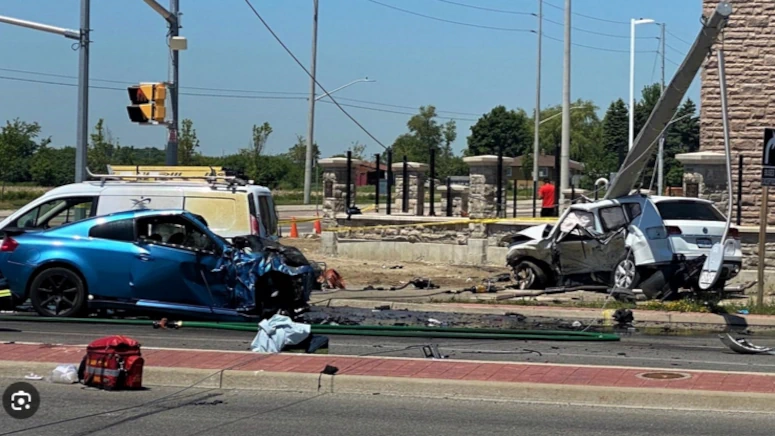
A Tragic Cannabis-Related Fatal Motor Vehicle Coll...
A sunny June afternoon. A minivan stopped at a red light. Inside: a mother and...
Read More
Cannabis, Alcohol and Suicide
Does daily cannabis use put your mental health at risk? New forensic research reveals a...
Read More
The Myth of “Next Day” Effects After S...
The debate about impairment after smoking cannabis often extends into the next day. A rigorous...
Read More