


CO Poisoning in a Tent
Carbon monoxide is a silent killer. This colourless, odourless poisonous gas has claimed countless lives since humans first discovered fire. It is formed by the incomplete combustion of carbon-containing compounds such as wood, propane gas, gasoline, and charcoal. Unlike other dangers in the wilderness, this poisonous gas offers no warning – no smell, no colour, no irritation to warn its victims. By the time symptoms appear, it is often too late.
One of the most tragic examples of this occurred on March 14th, 1999, when a family of four perished from CO poisoning in their tent. The victims had simply tried to stay warm on a cold night. They brought a propane stove inside their tent. They never woke up. This tragedy serves as a stark reminder that poisonous gas can accumulate in any enclosed space, even in the pristine wilderness where one would least expect danger.

One does not expect death due to toxic fumes in a pristine wilderness setting, yet this case illustrates the extreme hazard that can occur when CO is allowed to accumulate in any closed space.
Foutch and Henrichs, 1988

The Tragedy
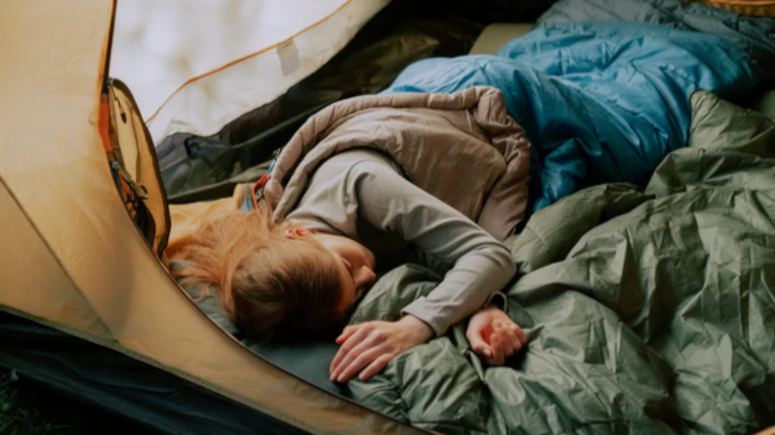
 On the afternoon of March 14th, 1999, a 51-year-old man, his 10-year-old son, a 9-year-old boy, and a 7-year-old girl were found dead in their zipped-up 2-room, 10 ft x 14 ft tent. A propane gas stove which was brought inside for warmth was still burning. The victims had died during the night, succumbing to the poisonous gas as they slept.
Their postmortem blood COHb concentrations were 50%, 63%, 69%, and 63% respectively. To understand these numbers, CO binds to haemoglobin in the body (COHb) with an affinity 200-250 times that of oxygen. The toxic effects are due to hypoxia – oxygen is no longer transported to the tissues and brain. At levels above 50%, this poisonous gas causes seizures, heart attacks, and death. The 7-year-old girl had the highest level at 69%. She never had a chance.
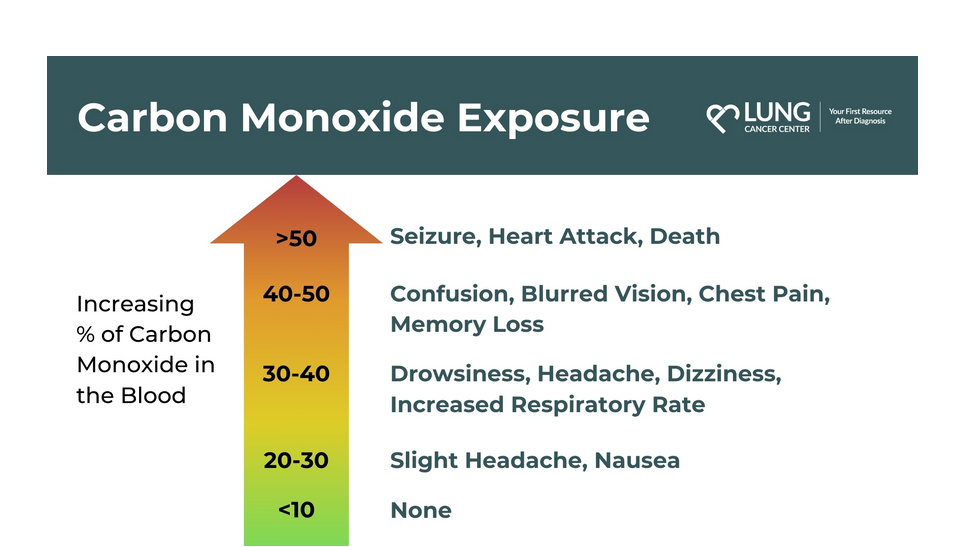
The symptoms of poisonous gas exposure follow a predictable pattern:
- Below 10% COHb: No symptoms
- 20-30% COHb: Slight headache, nausea
- 30-40% COHb: Drowsiness, headache, dizziness, increased respiratory rate
- 40-50% COHb: Confusion, blurred vision, chest pain, memory loss
- Above 50% COHb: Seizure, heart attack, death
The family in this tent likely fell asleep with mild symptoms and never woke up.
Production of CO in a Tent
There are 2 phases of CO production in poorly ventilated environments. Initially, there is a slow linear phase as oxygen is slowly depleted. This is followed by an exponential, rapidly rising increase of the poisonous gas until the flame is extinguished. Partial ventilation – such as a small window opening – can actually increase CO production compared to no ventilation. This is because the low-flame production of this poisonous gas is prolonged, creating a dangerous feedback loop.
A blue flame indicates little CO production, whereas an orange-yellow flame (which I think is more cheerful) produces far more of this poisonous gas. Many campers prefer the warmer, more cheerful orange flame – not realizing it is a warning sign.
The better a tent is at sealing out storms and water, the more airtight it becomes, trapping poisonous gas inside. CO can also build up if the tent’s fabric has condensation, or if snow has built up outside on the walls. CO will also increase inside the tent under zero wind conditions. The family’s zipped-up tent was designed to keep out the cold – but it also kept in the poisonous gas that killed them.
Risk Factors for CO Poisoning
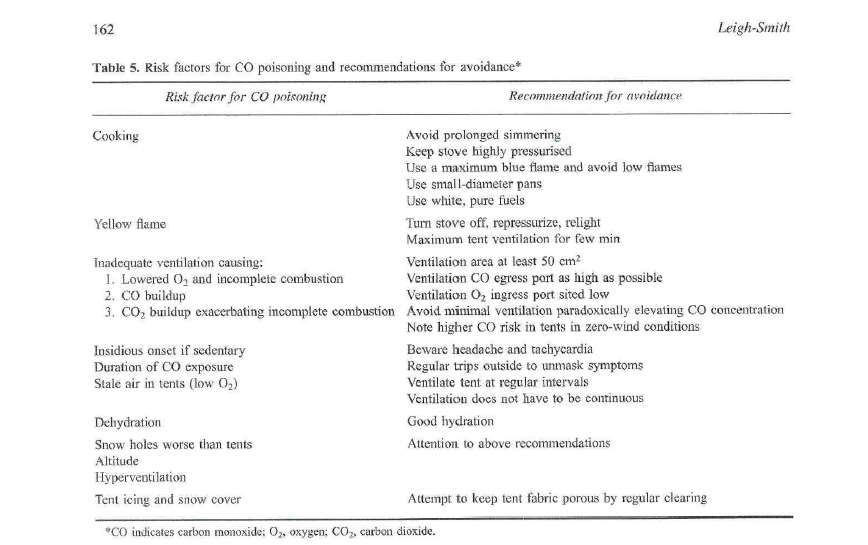 Opening tent flaps, doors, or windows is insufficient to prevent build-up of CO concentrations from fuel-burning devices. According to Wheeler et al. (1999), the risk factors for CO poisoning in a tent include:
Cooking practices:
- Avoid prolonged simmering
- Keep stove highly pressurized
- Use a maximum blue flame and avoid low flames
- Use small-diameter pans
- Use white, pure fuels
Ventilation issues:
- Inadequate ventilation lowers O₂ and causes incomplete combustion
- CO₂ buildup exacerbates incomplete combustion
- Ventilation area should be at least 50 cm²
- CO egress port should be as high as possible
- O₂ ingress port should be sited low
- Avoid minimal ventilation paradoxically elevating CO concentration
Other factors:
- Higher CO risk in tents in zero-wind conditions
- Insidious onset if sedentary – beware headache and tachycardia
- Duration of CO exposure – regular trips outside to unmask symptoms
- Stale air in tents – ventilate at regular intervals
- Dehydration – good hydration is essential
- Snow holes worse than tents – pay attention to ventilation
- Tent icing and snow cover – keep tent fabric porous by regular clearing
Every one of these factors contributed to the family’s deaths. The poisonous gas built up silently, and by the time anyone noticed, it was too late.
Conclusion
Wheeler et al. (1999) conclude:
“To avoid hazardous CO exposures, fuel-burning equipment such as camping stoves, camping heaters, lanterns, and charcoal grills should never be used inside a tent, camper, or other enclosed shelter. Opening tent flaps, doors, or windows is insufficient to prevent build-up of CO concentrations from these devices.”
My advice would be to always have a CO detector when you are inside a tent. This simple device can detect the poisonous gas long before it reaches dangerous levels. A CO detector costs less than $50. It could save your life or the lives of your loved ones.
The wilderness is beautiful. But the poisonous gas we bring with us – from stoves, heaters, and lanterns – can turn a camping trip into a tragedy. Don’t let it happen to you.
References:
- Leigh-Smith, S., “Carbon Monoxide Poisoning in Tents- A Review”, Wilderness and Environmental Medicine, 15: 157-163, 2004
- Wheeler, R., Koppen, M.A., Johnson, A.B., et al., “Carbon Monoxide Poisoning Deaths Associated with Camping- Georgia, March 1999”, MMWR, 48: 705-706, 1999
Contact a Forensic Expert Who Understands Poisonous Gas Toxicity
Consult Canada's Leading Forensic Toxicologist
James Wigmore has testified in over 700 criminal cases involving toxic substances, including carbon monoxide poisoning, alcohol impairment, and drug toxicity. With 50 years of experience at the Centre of Forensic Sciences in Toronto and authorship of Wigmore on Alcohol, he provides expert insight into the science of poisonous gas exposure and its forensic implications.
Contact James Wigmore TodayPut 50 years of forensic toxicology expertise on your side. Reach out now for expert consultation.
FAQs on CO Poisoning and Poisonous Gas in Tents
What is carbon monoxide?
It is a colourless, odourless, non-irritating poisonous gas formed by incomplete combustion of carbon-containing compounds.
How did the family in the 1999 tent tragedy die?
They died from CO poisoning after bringing a propane gas stove inside their tent for warmth.
What were their COHb levels?
50%, 63%, 69%, and 63% respectively. Levels above 50% cause seizures, heart attacks, and death.
Why is carbon monoxide so dangerous?
It binds to haemoglobin with an affinity 200-250 times that of oxygen, preventing oxygen from reaching tissues and the brain.
What are the symptoms of CO poisoning?
Headache, nausea, drowsiness, confusion, blurred vision, chest pain, and eventually death.
Can opening tent flaps prevent CO buildup?
No. Opening flaps, doors, or windows is insufficient to prevent CO buildup from fuel-burning devices.
Does ventilation always help reduce CO?
Not always. Partial ventilation can actually increase CO production by prolonging low-flame combustion.
What colour flame produces less CO?
A blue flame produces little CO, while an orange-yellow flame produces much more.
What are the risk factors for CO poisoning in a tent?
Inadequate ventilation, zero-wind conditions, stale air, tent icing, snow cover, and prolonged cooking.
What does James Wigmore recommend to prevent CO poisoning?
Always have a CO detector inside your tent, and never use fuel-burning devices inside enclosed shelters.
Recent News
CO Poisoning in a Tent
Carbon monoxide is a silent killer. This colourless, odourless poisonous gas has claimed countless lives since humans...
Read More
Will o’ The Wisp
The field of forensic sciences has evolved dramatically over the past century, but some of its most...
Read More
A Floating Carbon Monoxide Generator: Toxic Gas Ri...
A boat may seem like the perfect place to relax in fresh air and sunshine,...
Read More
CO- The Ancient, Silent Killer Does not Take Vacat...
The silent killer carbon monoxide is one danger most travellers never expect to encounter while...
Read More