


Melbye and Me
The field of forensic anthropology in Canada owes much to one man: Dr. Melbye. He founded one of the oldest forensic science programs at a Canadian university, built bridges with the Centre of Forensic Sciences, the Ontario Coroner’s Office, the RCMP, and police agencies across the province. This article is part of Project 50, which celebrates my experiences over a 50-year forensic toxicology career. It is about my nearly five years of teaching about alcohol and the breathalyzer at Erindale College – and about the man who welcomed me there.
I first met Dr. Melbye in January 1997, and I liked him immediately. As Blake Eligh wrote in the News Room on March 20, 2017: “Melbye was a founder of the UTM’s forensic science program and the Forensic Anthropology Outdoor Research Facility at Texas State. Many attendees were spotted wearing the Melbye-style dress code of Hawaiian shirts and jean jackets. The beloved professor was strongly remembered as an aficionado of jokes so bad that you couldn’t help but smile.”

Melbye was a founder of the UTM’s forensic science program and the Forensic Anthropology Outdoor Research Facility at Texas State. Many attendees were spotted wearing the Melbye-style dress code of Hawaiian shirts and jean jackets. The beloved professor was strongly remembered as an aficionado of jokes so bad that you couldn’t help but smile.
Blake Eligh, News Room, March 20, 2017

Bone Man (1936-2017)
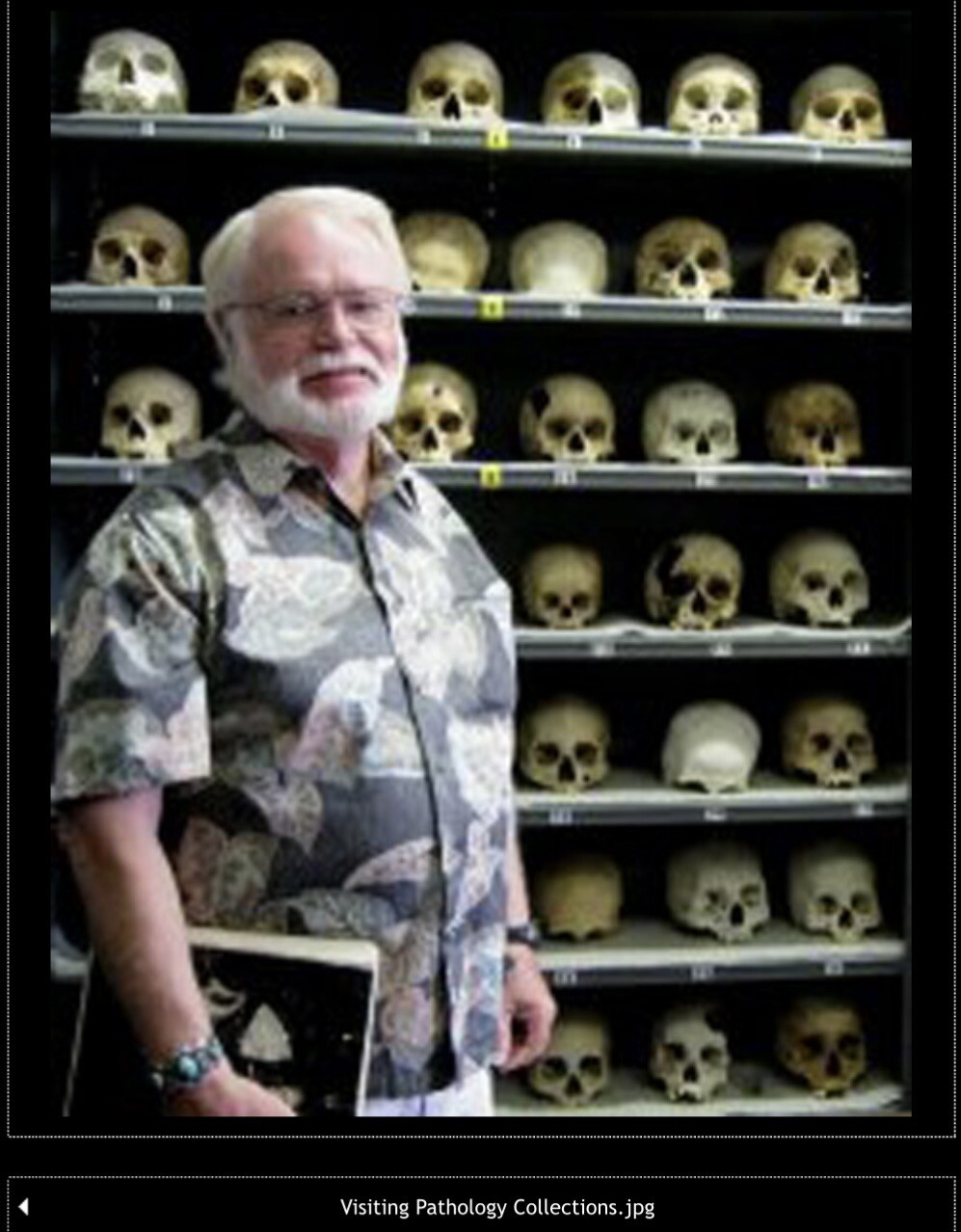 According to my journals, which date from 1988, I first met Dr. Melbye at his fledgling forensic program at Erindale College on Thursday, January 16th, 1997, when he warmly greeted me to provide a lecture to his undergraduate students. I did this every year until 2000. It was my small contribution to the growth of forensic anthropology education in Canada.
I was always impressed by his kindness, warmth, and quiet integrity. The only time I saw him slightly angry was when I made a difficult journey through a blinding snowstorm from downtown Toronto to the Erindale campus – and over half the students who lived much closer did not show up to class. He did not shout. He simply shook his head. That was Dr. Melbye.
When I visited Dr. Melbye in his office, it was always a mess – books and papers everywhere. He was illegally smoking in his office at the time and had ashtrays filled with cigarette butts everywhere. On the floor was a large dog bowl half-full of kibble. It was chaotic, but it was his chaos. And in that office, surrounded by the clutter of a lifetime of forensic anthropology research, he was entirely at home.
He obtained his PhD from the University of Toronto in 1969, where he taught for 35 years as a forensic anthropology specialist. His legacy in the field is immense.
"Italian"
One early problem Dr. Melbye had was that pathologists at the time considered themselves to be “jacks of all trades” and would render forensic anthropology opinions without any formal training. This was a serious issue that undermined the credibility of the discipline.
One skull, a pathologist had labelled as a “Black Male” of recent origin, which meant the police would have to investigate the case. When Dr. Melbye examined the skull, he knew it was not a male and was historic, not recent. A carbon dating showed the skull dated to 1100 AD, which saved the police an investigation. This was the value of genuine forensic anthropology expertise.
Another skull the pathologist had labelled as “Italian”. Dr. Melbye found that one amusing. The pathologist had no basis for such a conclusion – it was guesswork dressed up as science. This story illustrates why forensic anthropology requires rigorous training, not casual assumptions.
Erindale College to UTM Institute of Forensic Sciences
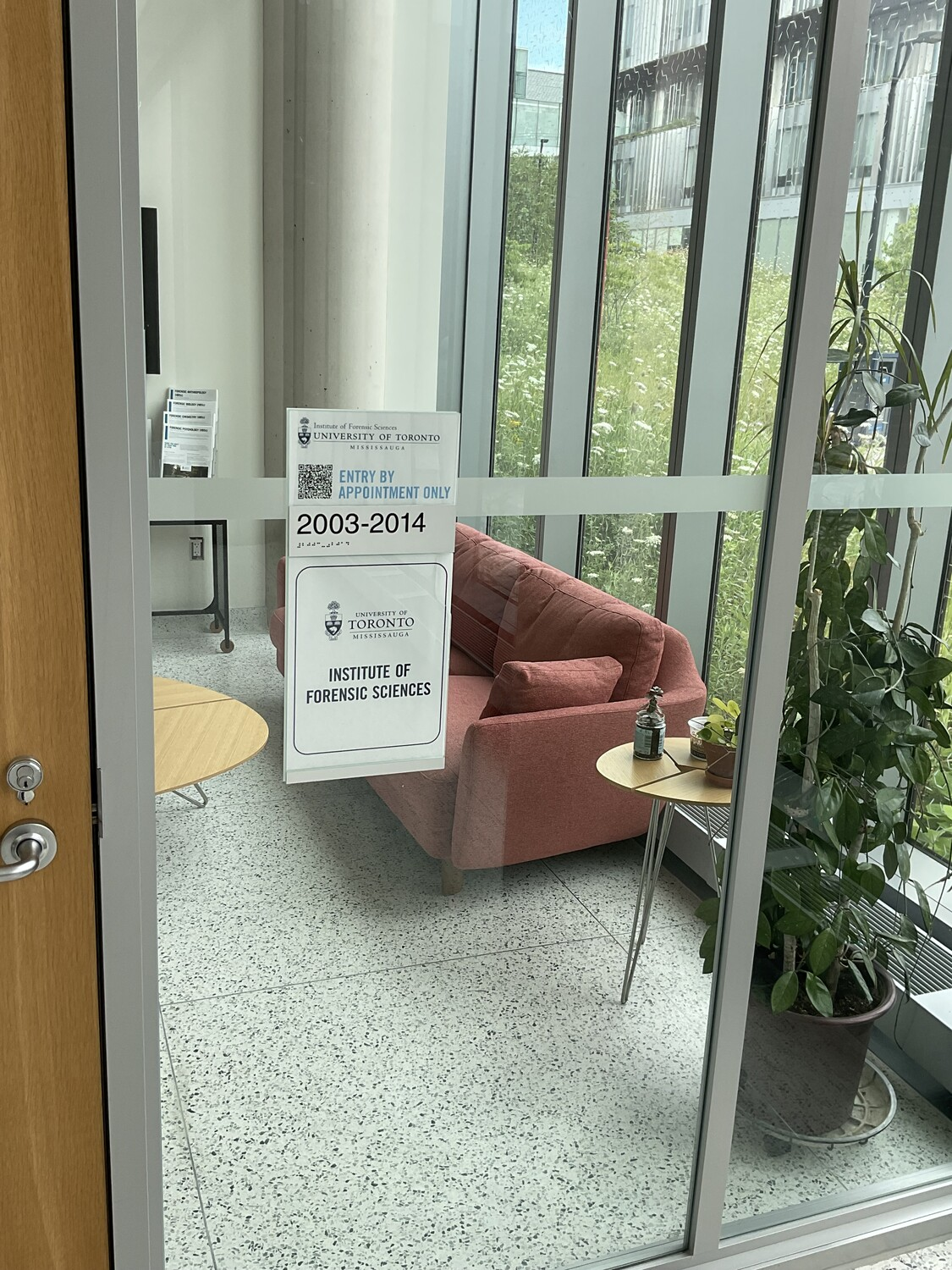 Dr. Jim Young, who became the Chief Coroner of Ontario, was a supporter of the Erindale forensic program. Erindale became University of Toronto Mississauga (UTM) at the Institute of Forensic Sciences (IFS). This transformation was the direct result of Dr. Melbye’s vision for forensic anthropology and forensic science education in Canada.
I was able to see the success of Dr. Melbye’s work when I visited UTM in July 2026 and toured with my colleagues Dr. Karen Woodall (Director of the Institute) and Dr. Christina Lamparter. The IFS is now housed in the modern Science building with impressive offices and labs. It is a world away from the messy office and kibble bowl – but the spirit of Dr. Melbye lives on in every student who passes through its doors.
Dr. Jim Young (Aside)
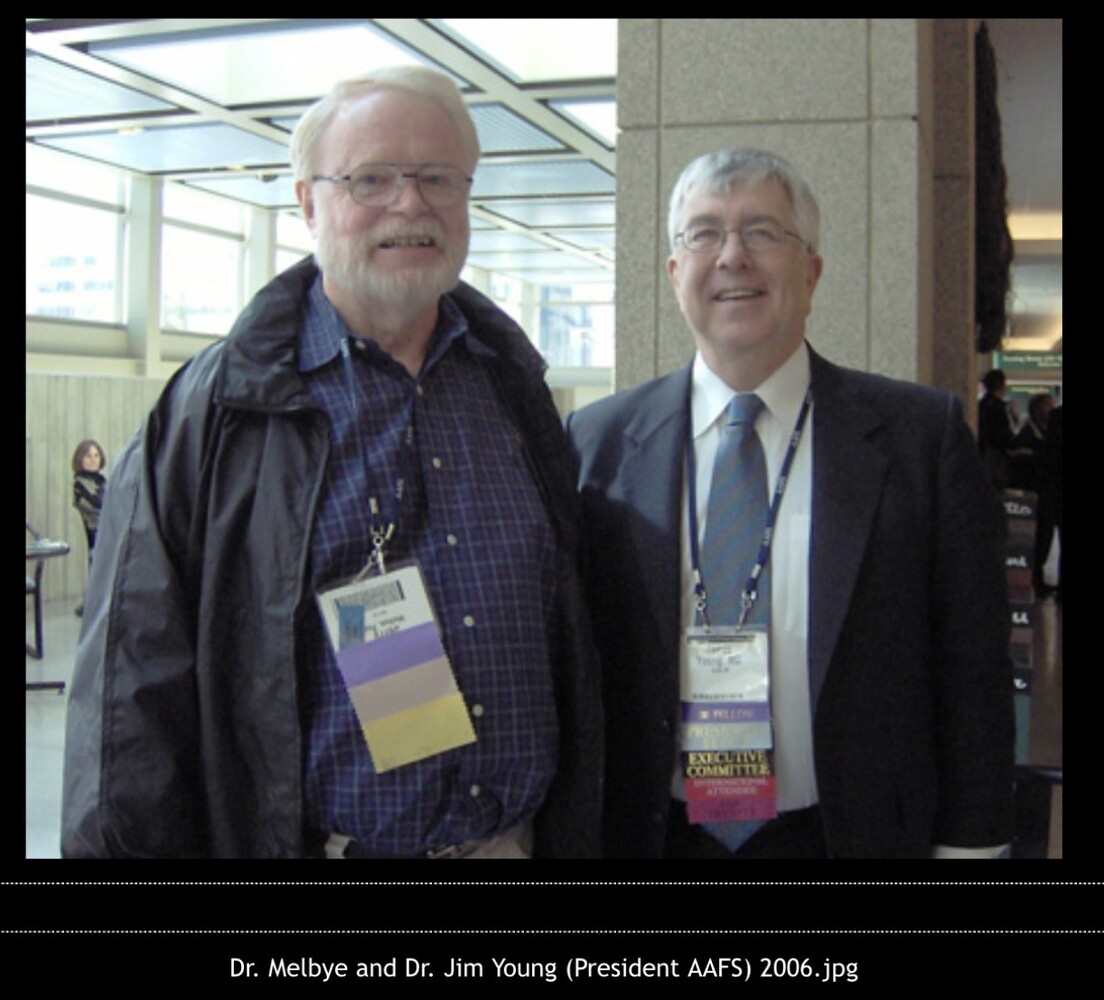 As an aside, I would like to state that Jim Young lived on the same street as I did – Strathmore Blvd. in East Toronto – and went to Earl Beatty School as did I. He was more of a friend with my elder brother Larry, but I do remember him delivering the afternoon Toronto Star every day to my family home. He later became a sports writer for the Toronto Star, then a family physician in Elmvale near my Wasaga Beach cottage, and eventually became the prestigious Chief Coroner of Ontario. His support of Dr. Melbye’s forensic anthropology program was instrumental in its success.
Conclusion
My experiences with Dr. Melbye certainly deserve to be included in my Project 50, as he was a pioneer of forensic education and training in Canada, and I liked him. He built a program that has trained generations of forensic anthropology and forensic science professionals. He wore Hawaiian shirts and jean jackets. He told terrible jokes. He kept a dog bowl full of kibble on his office floor. And he changed forensic science in Canada forever.
Contact a Forensic Toxicologist with 50 Years of Experience
Consult Canada's Leading Forensic Expert
James Wigmore has spent 50 years in forensic toxicology, teaching at Erindale College and testifying in over 700 criminal cases. As author of Wigmore on Alcohol and a colleague of forensic anthropology pioneer Dr. Melbye, he brings a wealth of experience to forensic investigations and courtroom testimony.
Contact James Wigmore TodayPut 50 years of forensic expertise on your side. Reach out now for expert consultation.
FAQs on Forensic Anthropology and Dr. Melbye
Who was Dr. Melbye?
A forensic anthropologist who founded one of the oldest forensic science programs at a Canadian university (Erindale College, now UTM).
When did James Wigmore first meet Dr. Melbye?
On Thursday, January 16th, 1997, at Erindale College.
What did Dr. Melbye teach?
Forensic anthropology at the University of Toronto for 35 years.
What was the "Italian" skull story?
A pathologist labelled a skull as "Italian" without any formal forensic anthropology training. Dr. Melbye found it amusing.
How did Dr. Melbye save police an investigation?
He examined a skull a pathologist had labelled as a recent "Black Male" and determined it was historic, dating to 1100 AD.
Who was Dr. Jim Young?
He became Chief Coroner of Ontario, supported the Erindale forensic program, and lived on the same street as James Wigmore.
What did Dr. Melbye found at Texas State?
The Forensic Anthropology Outdoor Research Facility.
What is the UTM Institute of Forensic Sciences?
The modern successor to Dr. Melbye's Erindale forensic program, now housed in the Science building at UTM.
Recent News
Melbye and Me
The field of forensic anthropology in Canada owes much to one man: Dr. Melbye. He...
Read More
Niagara Falls, I Thought It Would be Bigger!
Some professional relationships transcend borders and decades. As a forensic toxicologist, I have been fortunate...
Read More
What is Project 50?
For 50 years, I have worked in the fascinating and challenging field of forensic toxicology....
Read More
UKIAFT AGM & Conference 2026
This September, the premier forensic toxicology conference of 2026 brings together the world’s leading minds in London...
Read More