


Earthquake!
Listen, Understand, Consider, Answer, Shut-up. The Doug Lucas approach to answering questions in court. When I started at the Centre of Forensic Sciences in Toronto on February 16th, 1976 as a junior Breathalyzer technician, John Howes had already been testifying in criminal court throughout Ontario for many years. He was a master of the courtroom – calm, collected, and always prepared. His testimony style became legendary, and his wit was as sharp as his knowledge of forensic alcohol toxicology. John Howes was the kind of expert witness every prosecutor wanted and every defence lawyer feared.
His approach to cross-examination is still taught to forensic scientists today. The key was simple: never argue, never get flustered, and always answer the question directly. This method, known as the LUCAS approach, was developed by Doug Lucas, the Director of the Centre of Forensic Sciences, and it shaped how forensic experts across Canada testified in court. It also led to one of the most memorable courtroom moments in Ontario legal history – the Breathalyzer case that ended with a one-word answer: Earthquake.
"Are You Using that Calculator?"
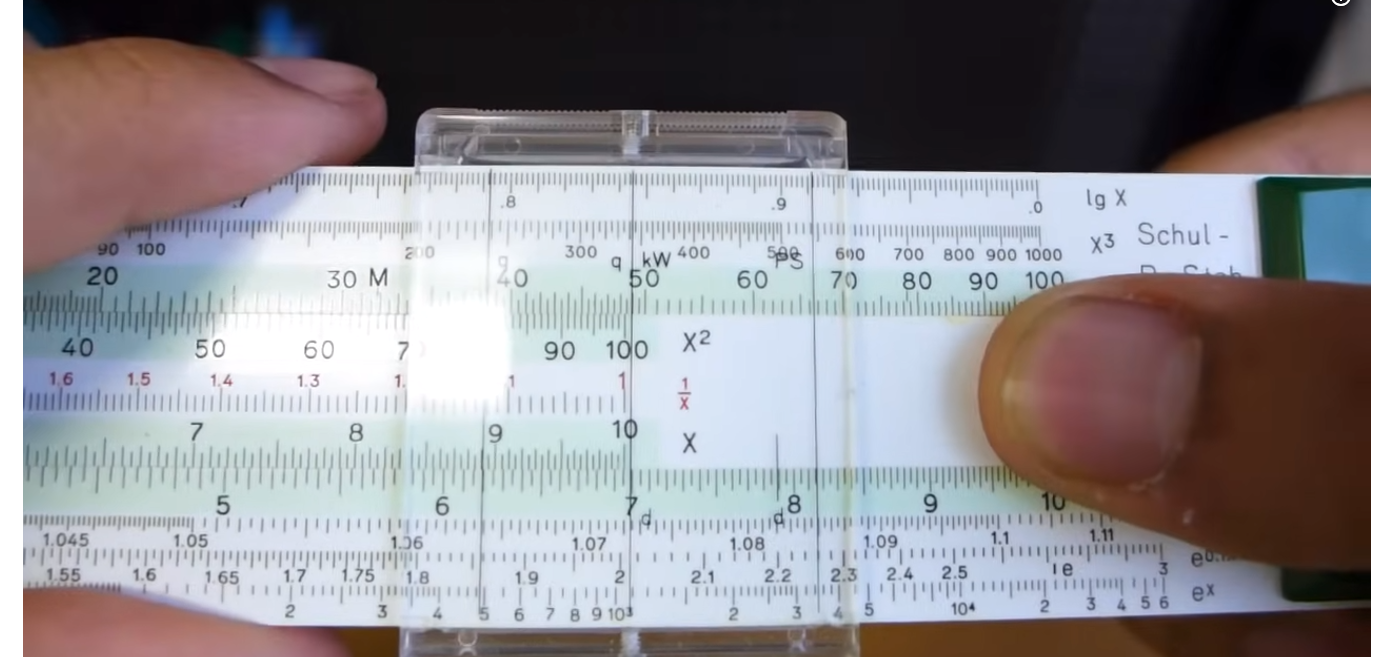 When John Howes first started testifying, the alcohol experts were using slide rules to calculate BACs. I actually learned how to use a slide rule when I was in Grade 12 in math class in high school. The slide rule was the standard tool for forensic calculations before electronic calculators became available. It required skill and practice to use accurately – and it was easy to sabotage.
In old copies of the Defense of Drunk Driving, lawyers were advised to ask to see the expert’s slide rule. Then secretly take the slider out and insert it upside down. Next, ask the expert to perform multiple rapid calculations, which would rattle the expert on the stand who may lose credibility with the judge or jury. This was one of the earliest tricks used by defence lawyers to challenge Breathalyzer evidence. It was a simple but effective tactic that could make even an experienced expert appear incompetent.
It was quite a change when small portable hand calculators were available to calculate BACs on the stand easily. But calculators were new, and typically judges and courts don’t like anything new. When one defence counsel raised a point about the calculator’s accuracy and reliability, the judge ruled that John Howes could not use the calculator. As he had not brought the obsolete slide rule, he had to perform all calculations by hand – using long division and multiplication on paper in front of the jury.
From the bench, the judge kept looking over and demanded: “Are you using that calculator?” Fortunately, by the time I was qualified to testify as a forensic toxicologist, the calculator was widely accepted, and I was never asked that question. But John Howes had to endure the transition period when new technology was viewed with suspicion by the courts.
The Newspaper Clipping
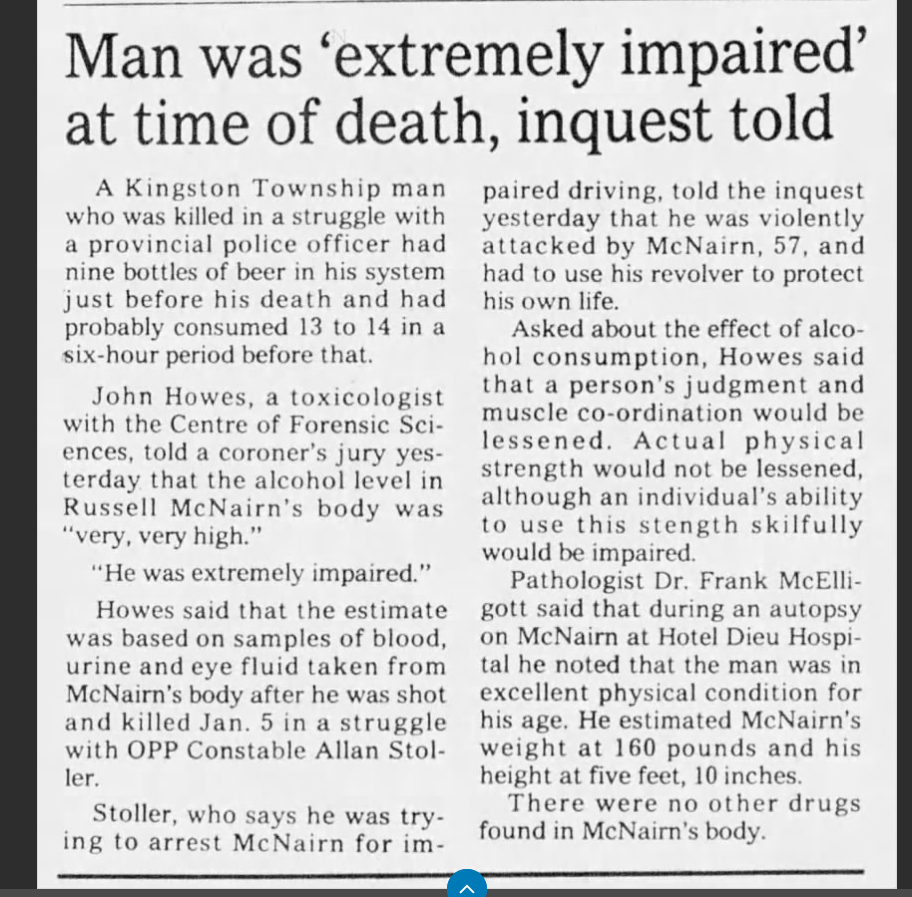 A 1985 newspaper clipping from a coroner’s inquest shows John Howes’s expertise in action. A Kingston Township man who was killed in a struggle with a provincial police officer had nine bottles of beer in his system just before his death and had probably consumed 13 to 14 in a six-hour period before that. John Howes, a toxicologist with the Centre of Forensic Sciences, told a coroner’s jury that the alcohol level in Russell McNairn’s body was “very, very high.” He was extremely impaired.
Howes said that the estimate was based on samples of blood, urine and eye fluid taken from McNairn’s body after he was shot and killed. Asked about the effect of alcohol consumption, Howes said that a person’s judgment and muscle co-ordination would be lessened. Actual physical strength would not be lessened, although an individual’s ability to use this strength skilfully would be impaired. This distinction between strength and coordination is crucial in Breathalyzer cases where defendants claim they were still functioning normally despite high BACs.
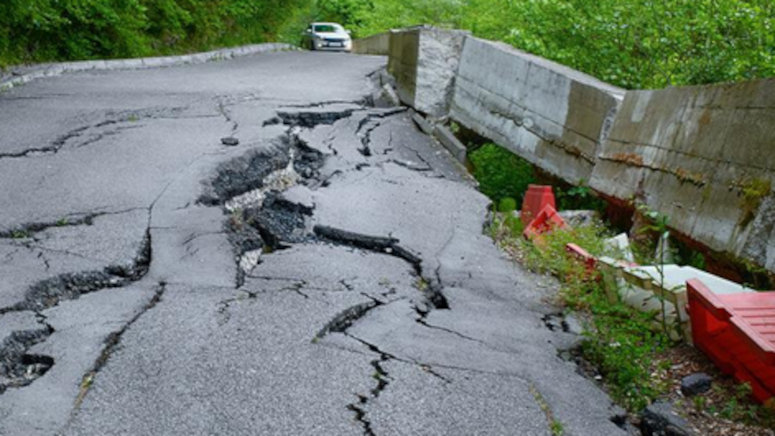
Earthquake
In one case of impaired driving where the driver blew 180 mg/100mL on the Borkenstein Breathalyzer, the defence lawyer asked him about other causes for the signs of impairment besides alcohol consumption.
Lawyer: Now Mr. Howes, what could cause a person to be red-faced or flushed?
JH: He could have had a sunburn.
Lawyer: Excellent, Mr. Howes. What could cause bloodshot eyes?
JH: He could have been swimming in a chlorine pool.
Lawyer: Now what about the odour of an alcoholic beverage?
JH: Perhaps non-alcohol beer.
John Howes just answered the questions without arguing or protesting, according to the LUCAS approach. He did not take the bait. He did not become defensive. He simply gave straightforward, plausible answers that undermined the defence’s attempt to create doubt. The LUCAS approach – Listen, Understand, Consider, Answer, Shut-up – required the expert to answer only what was asked and nothing more. It was a discipline that John Howes had perfected over decades of testimony.
The final question by the lawyer was:
Lawyer: Now what could explain why my client swayed and had to hold the walls to keep himself up?
JH: Earthquake.
The judge laughed and convicted the driver of impaired driving. The answer would probably not work in California, but in Ontario we haven’t had a significant earthquake in centuries. The absurdity of the answer highlighted the absurdity of the defence’s attempt to explain away every sign of impairment. It was a moment of courtroom genius that only John Howes could have delivered.
In Memory of a Master
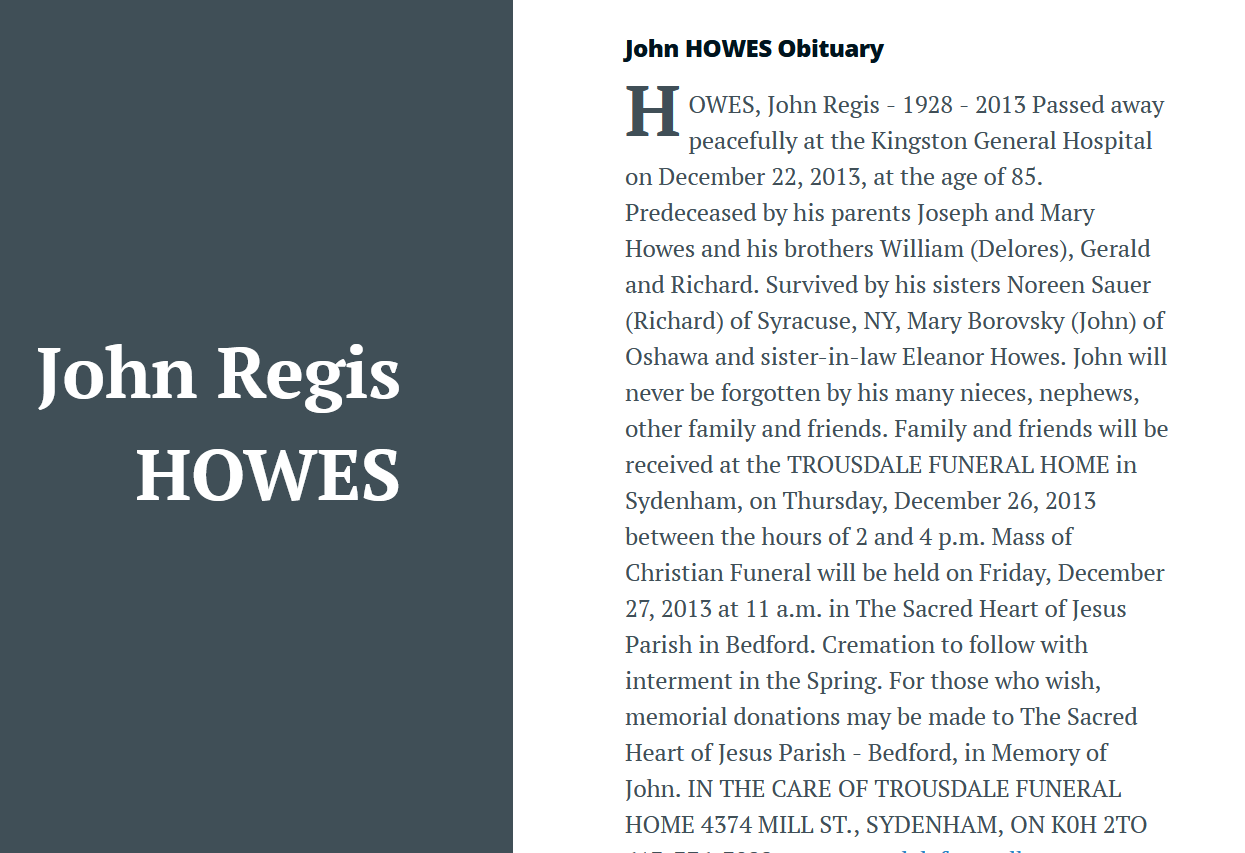 Unfortunately, after he retired from the CFS I did not have much contact with him. But I did find his obituary. John Howes passed away peacefully at the Kingston General Hospital on December 22, 2013, at the age of 85. He was predeceased by his parents Joseph and Mary Howes and his brothers William, Gerald and Richard.
He was survived by his sisters Noreen Sauer of Syracuse, NY, Mary Borovsky of Oshawa and sister-in-law Eleanor Howes. Family and friends were received at the Trousdale Funeral Home in Sydenham, and a Mass of Christian Funeral was held at The Sacred Heart of Jesus Parish in Bedford.
John Howes co-authored one of the earliest papers on the accuracy of the Borkenstein Breathalyzer compared to blood alcohol: “A Study of the Accuracy of the Breathalyzer as Operated by Police Personnel” (Journal of Forensic Sciences, 1967). This paper was foundational in establishing the reliability of Breathalyzer evidence in Canadian courts. His legacy lives on in every forensic toxicologist who steps into a courtroom and follows the LUCAS approach.
John Howes was a giant in forensic science, and his contributions to Breathalyzer technology and courtroom testimony remain unmatched. He taught us all how to Listen, Understand, Consider, Answer, and Shut-up.
Reference
John did co-author one of the earliest papers on the accuracy of the Borkenstein Breathalyzer compared to blood alcohol.
Howes, J.R., Hallett, R.A., and Lucas, D.M., “A Study of the Accuracy of the Breathalyzer as Operated by Police Personnel”, Journal of Forensic Sciences, 12(4): 444-453, 1967
Contact a Forensic Expert Who Knows Breathalyzer History
Consult Canada's Leading Forensic Toxicologist
James Wigmore has testified in over 700 criminal cases involving the Breathalyzer, alcohol elimination, and impaired driving defence. With 50 years of experience at the Centre of Forensic Sciences in Toronto and authorship of Wigmore on Alcohol, he provides expert insight into the science of alcohol metabolism and Breathalyzer technology for legal professionals.
Contact James Wigmore TodayPut 50 years of forensic alcohol expertise on your side. Reach out now for expert consultation.
FAQs on the Breathalyzer and John Howes
Who was John Howes?
John Howes was a forensic toxicologist at the Centre of Forensic Sciences in Toronto who testified in criminal courts across Ontario for decades. He was known for his calm courtroom demeanor and wit.
What is the LUCAS approach?
Listen, Understand, Consider, Answer, Shut-up. It is a method developed by Doug Lucas for expert witnesses to answer questions directly without arguing or becoming defensive.
What is the "Earthquake" story?
In a DUI case, the defence lawyer asked John Howes what could cause a driver to sway and hold walls. Howes answered "Earthquake" – a reference to the fact that Ontario rarely experiences earthquakes. The judge laughed and convicted the driver.
What technology did experts use before calculators?
They used slide rules to calculate BACs. Defence lawyers would sometimes sabotage slide rules by inserting the slider upside down to rattle the expert.
Did John Howes have to stop using a calculator in court?
Yes. A judge ruled that John Howes could not use a calculator because a defence counsel raised concerns about its accuracy and reliability. He had to perform all calculations by hand.
What was the newspaper clipping about?
A 1985 coroner's inquest where John Howes testified that a man who died after a struggle with police was "extremely impaired" with a very high alcohol level.
When did John Howes pass away?
He passed away on December 22, 2013, at the age of 85.
What paper did John Howes co-author?
He co-authored "A Study of the Accuracy of the Breathalyzer as Operated by Police Personnel" in the Journal of Forensic Sciences, 1967.
What does the Doug Lucas approach teach?
Expert witnesses should Listen, Understand, Consider, Answer, and Shut-up – answering only what is asked without volunteering extra information.
What is the significance of the "Earthquake" answer?
It demonstrated John Howes's quick wit and ability to use humour to highlight the absurdity of the defence's case.
Recent News
Melbye and Me
The field of forensic anthropology in Canada owes much to one man: Dr. Melbye. He...
Read More
Niagara Falls, I Thought It Would be Bigger!
Some professional relationships transcend borders and decades. As a forensic toxicologist, I have been fortunate...
Read More
What is Project 50?
For 50 years, I have worked in the fascinating and challenging field of forensic toxicology....
Read More
UKIAFT AGM & Conference 2026
This September, the premier forensic toxicology conference of 2026 brings together the world’s leading minds in London...
Read More