


The Myth of “Next Day” Effects After Smoking Cannabis
The debate about impairment after smoking cannabis often extends into the next day. A rigorous systematic review of 20 studies, analyzing data from 458 subjects, provides crucial evidence to separate fact from fiction on this topic. This article focuses specifically on the effects of smoking cannabis, distinct from other consumption methods like edibles or concentrates, which may have different pharmacokinetics.
The central question is whether the psychoactive component THC, which is fat-soluble and remains detectable in the body, causes residual impairment many hours after use. The review’s findings offer a clear and significant insight for 2026: the scientific evidence for next-day impairment is exceptionally weak.
Key Finding: A Majority of Studies Show No Next-Day Impairment
The systematic review provides a decisive overview of the existing research, covering studies published from 1973 to 2020. The conclusion is substantial: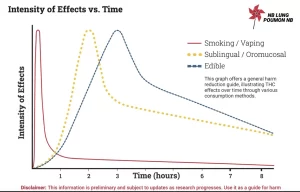
- 16 out of the 20 studies(80%) found no evidence of next-day impairment on driving simulators, flight simulators, or other neuropsychological tasks when tested 8 hours or more after smoking cannabis.
- The 4 studies that did report impairment were all published over 18 years ago, with the oldest being 30 years old. Crucially, none of these used modern, gold-standard research designs.
- These older studies lacked randomized, double-blind, placebo-controlled methodologies. This flaw makes it impossible to determine if poor performance was due to smoking cannabis or other factors like participant tiredness or boredom.
The review’s analysis suggests that traces of THC slowly released into the bloodstream do not equate to functional impairment, much like the trace endogenous alcohol in our bodies does not cause intoxication.
The Critical Importance of Placebo-Controlled Design
Understanding why study design matters is key to interpreting these results. Without a proper placebo control group, research cannot isolate the cause of performance changes.
- The Placebo Problem: In a test without placebos, if participants perform worse the next day after smoking cannabis, researchers cannot tell if it’s due to cannabis or simply because the subjects are more tired during the second testing session—a common occurrence for anyone, regardless of substance use.
- Establishing Causality: True residual impairment can only be claimed if the group that used cannabis performs significantly worse than a sober placebo group tested under the exact same conditions and time intervals. The higher-quality studies in this review that included these controls largely found no difference.
This methodological insight is vital for policymakers, employers, and individuals making safety-sensitive decisions based on scientific evidence rather than outdated assumptions.
An Intriguing Twist: Potential for Reduced Next-Day Risk
An interesting review by MacCallum et al. (2022) raises the possibility that cannabis use may, in some cases, reduce impairment on the following day. The authors note that certain medical conditions are themselves associated with an increased risk of impairment. Studies have shown that conditions such as multiple sclerosis, insomnia, epilepsy, anxiety, and depression are linked to a higher risk of motor vehicle accidents.
Reducing or eliminating the symptoms associated with these conditions may therefore decrease overall impairment risk. If medical cannabis is effective in controlling symptoms that independently impair motor or cognitive function, individuals may actually experience a lower risk of impairment compared with their untreated baseline.
Supporting this perspective, two studies reviewed by McCartney et al. (2023) reported positive effects 48 hours after smoking cannabis. In one study, the number of correct trials on cognitive testing increased (Matheson et al., 2020), while another found reduced swerving in a simulated driving task 48 hours after smoking cannabis(Brands et al., 2018).
This perspective highlights that the effects of cannabis are not uniform and should be considered within the broader context of an individual’s health status and therapeutic use.
Conclusion and Implications for 2026
The body of evidence leads to a clear conclusion: the persistent myth of universal “next-day hangover” effects from smoking cannabis is not strongly supported by modern science.
- A small number of methodologically weak, older studies have suggested impairment.
- However, the large majority of higher-quality, controlled studies have found no residual negative effects on performance the day after smoking cannabis.
For 2026, this means that policies regarding safety-sensitive activities—such as workplace rules, driving laws, or pilot regulations—should be nuanced. They must distinguish between acute impairment (which is well-established) and residual effects, relying on contemporary research rather than decades-old data. This evidence supports a shift towards fairer, science-based standards that focus on demonstrable impairment rather than the mere presence of historical THC metabolites.
References
Brands, B., et al. “Acute and Residual Effects of Smoked Cannabis:” Impact on Driving Speed and Lateral Control, Heart Rate and Self-Reported Drug Effects”, Drug Alcohol Depend, 205: 107641, 2019
MacCallum, C.A., Lo, L.A., Pistawka, C.A., Christiansen, A., Bolvin, M., and Snider-Adler, M., “A Clinical Framework for Assessing Cannabis-Related Impairment Risk”,
Matheson, J, et al, “Acute and Residual Mood and Cognitive Performance of Young Adults Following Smoked Cannabis.” Pharmacol. Biochem. Behav. 194: 172937, 2020
McCartney, D., Suraev, A., and McGregor, I.S., “The Next Day Effects of Cannabis Use. A Systematic Review”, Cannabis and Cannabinoid Research, 1: 92-114, 2023
Facing Charges Based on "Next Day" Impairment?
Forensic Science Debunks the Myth of Cannabis Hangover
A major 2023 systematic review of 20 studies confirms what modern forensic science already shows: 80% of studies found no evidence of next-day impairment from smoking cannabis. Yet, outdated assumptions about residual THC effects still influence legal and workplace policies. James Wigmore’s forensic team specializes in translating this cutting-edge research into clear, defensible arguments that challenge charges or disciplinary actions based on the presence of metabolites alone, rather than demonstrable impairment.
Challenge Your Case with Forensic ScienceDon’t let outdated science dictate your outcome. Contact us for a case review grounded in the latest evidence on cannabis impairment.
FAQs on Next-Day Effects of Smoking Cannabis
What is the main finding of the systematic review on next-day cannabis effects?
The review of 20 studies found that 16 of them (80%) showed no evidence of next-day impairment on driving, flight simulators, or neuropsychological tasks more than 8 hours after smoking cannabis.
How many studies in the review found next-day effects?
Only 4 out of the 20 studies reviewed suggested there were next-day effects.
What was a major flaw in the studies that did find next-day impairment?
None of those 4 studies used a randomized, double-blind, placebo-controlled design, which is the gold standard for reliably attributing an effect to the substance being tested.
Why is a placebo group so important in these studies?
Without a placebo group, researchers cannot determine if worse performance the next day is due to cannabis or to other factors like participants being more tired or bored during the follow-up test.
How old were the studies that found impairment?
All studies showing next-day effects were published more than 18 years ago, with some being over 30 years old.
Does THC being fat-soluble mean it causes impairment for days?
No. The article argues that while fat-soluble THC is released slowly, the trace amounts do not necessarily cause functional impairment, similar to how the body's trace endogenous alcohol does not cause intoxication.
Could cannabis use ever reduce next-day impairment risk?
The article cites a review suggesting that for individuals using medical cannabis to treat conditions like insomnia, anxiety, or multiple sclerosis, controlling those symptoms might actually lower their baseline risk of impairment the next day.
Were there any studies showing a positive next-day effect?
Yes, the article mentions two studies where performance (correct trials in a test and simulated driving control) actually improved 48 hours after cannabis use, likely due to the alleviation of underlying medical symptoms.
What forms of cannabis use does this article not cover?
The article specifies that it focuses only on smoked cannabis and does not evaluate other forms like edibles, oromucosal sprays, vaping, dabs, or concentrates, which may have different effect durations.
What is the overall conclusion of the article?
The conclusion is that there is limited scientific evidence to support the assertion that smoking cannabis impairs performance the next day, and higher-quality studies have largely not found such an effect.
Recent News

The Myth of “Next Day” Effects After S...
The debate about impairment after smoking cannabis often extends into the next day. A rigorous...
Read More
Does Workplace Cannabis Use Increase the Risk of I...
A critical new study provides essential data on cannabis use and workplace safety, revealing a clear distinction...
Read More
Oral Fluid Screening and Blood Tests for THC in Su...
The legalization of cannabis in Canada in 2018 created an urgent need for reliable, roadside...
Read More
How Long Does THC Stay in Your Body and Impact Rea...
How long does THC stay in your body, and more importantly, how long does it...
Read More