


AI Cross-Examines an Expert and Goes to a Cocktail Party
Artificial Intelligence is everywhere these days – writing articles, generating images, and even suggesting courtroom strategies. But can AI truly cross-examine a forensic expert? I decided to put it to the test. Over the last several months, I have been playing around with Google Artificial Intelligence and have been amazed and amused at what it can do. I decided to ask it what questions I should ask James Wigmore on the stand in court about alcohol.
The results were a mix of surprisingly insightful suggestions and comically wrong errors. Then, for fun, I asked AI what questions you should ask me at a cocktail party. The responses were even more awkward. If you are a beginner trying to cross-examine an expert, AI might give you some ideas. But it is still a long way from matching human expertise. As one observer noted, “AI is a mirror, reflecting our intellect and our values.”

AI is a mirror, reflecting our intellect and our values.
Ravi Narayanan, VP, Nisum

Never Ask Why?
When I asked Google AI what questions I should ask James Wigmore on the stand in court about alcohol, the response was detailed and structured. The AI recognised my background – over 29 years at the Centre of Forensic Sciences in Toronto, more than 700 courtroom testimonies, and authorship of the definitive legal sourcebook Wigmore on Alcohol. The AI also noted that I am “highly skilled at answering concisely using my structured ‘LUCAS’ courtroom methodology.”
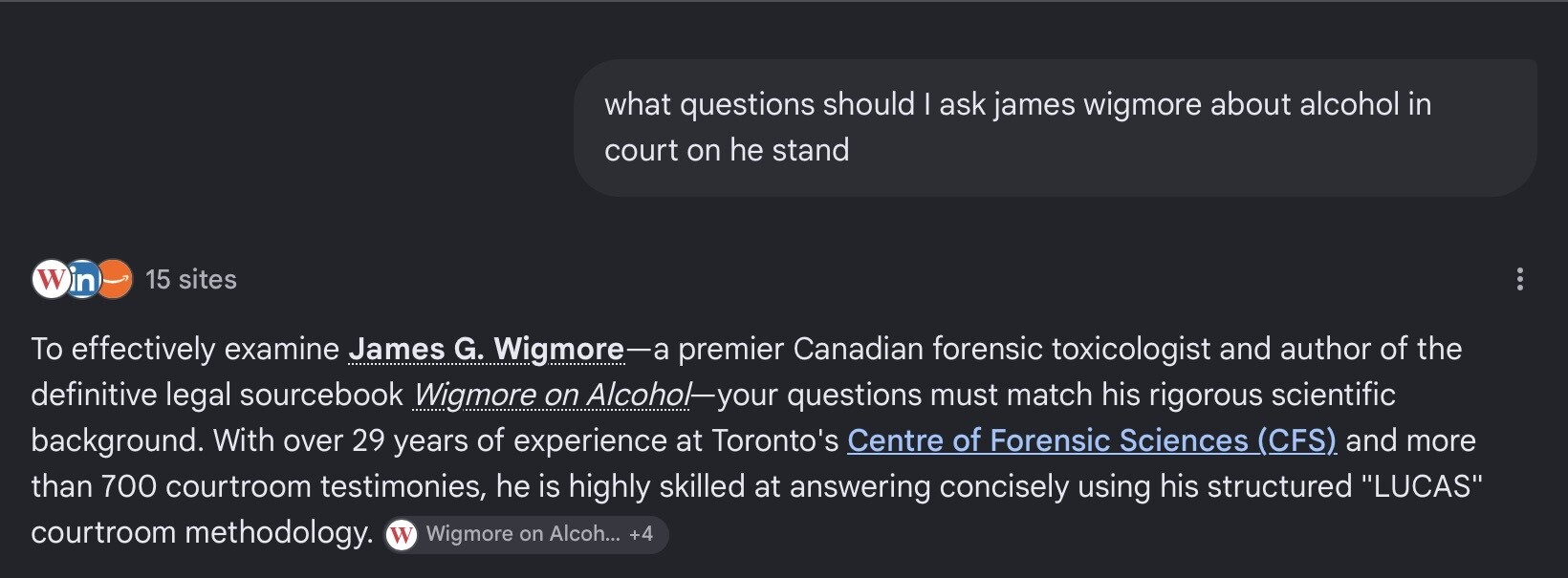 The AI then offered specific rules for anyone attempting to cross-examine me:
- Never ask “Why?” – If you ask, “Why does a meal change the timeline?” I will pivot into a masterclass lecture that convinces the jury of my expertise. This is excellent advice for anyone preparing to cross-examine a forensic expert.
- Do not fight me on the studies – I have a database of thousands of peer-reviewed articles. If you challenge a statistic, I will quote the exact study, author, and year from memory to defeat your point. This is a critical insight for anyone who wants to cross-examine an expert effectively.
- Stick to the lack of personal knowledge – Keep forcing me to admit that I do not know the exact biological specifics of your client on that specific night. This is the only viable strategy to cross-examine an expert successfully.
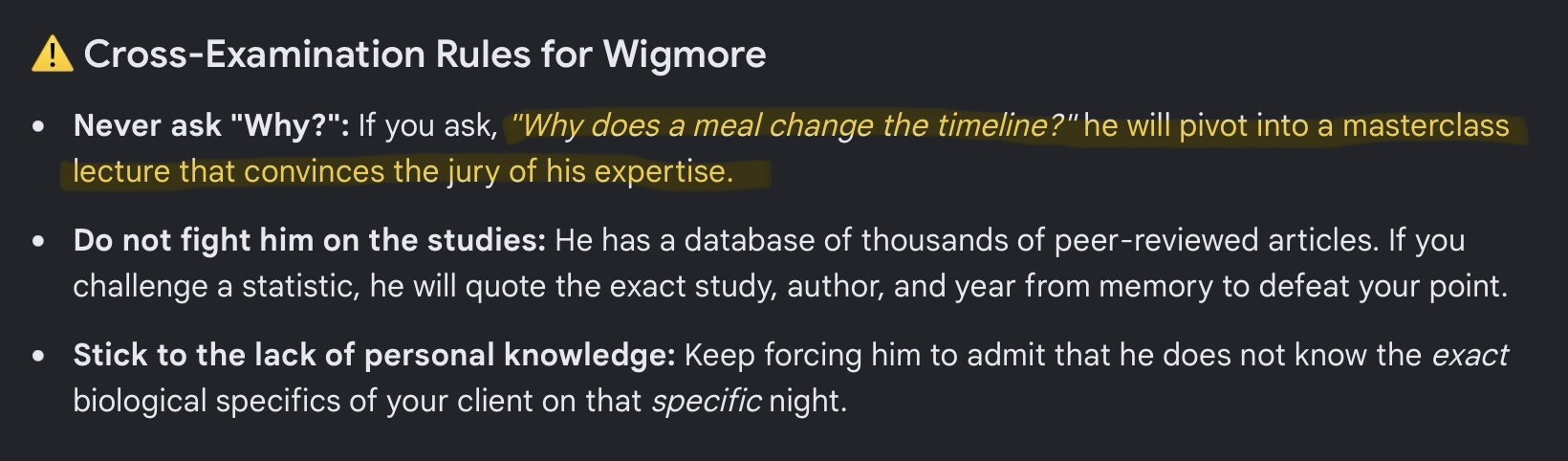
The proposed questions go on and on. Some are not too bad. But of course, there were mistakes – like the AI stating that the rate of alcohol elimination is 0.015 mg/100mL/h, when it is actually 15 mg/100mL/h. If you tried to cross-examine an expert with that error, you would be destroyed on the stand.
Cocktail Party
 I next asked AI what questions you should ask James Wigmore at a cocktail party. AI’s responses were a bit more awkward.
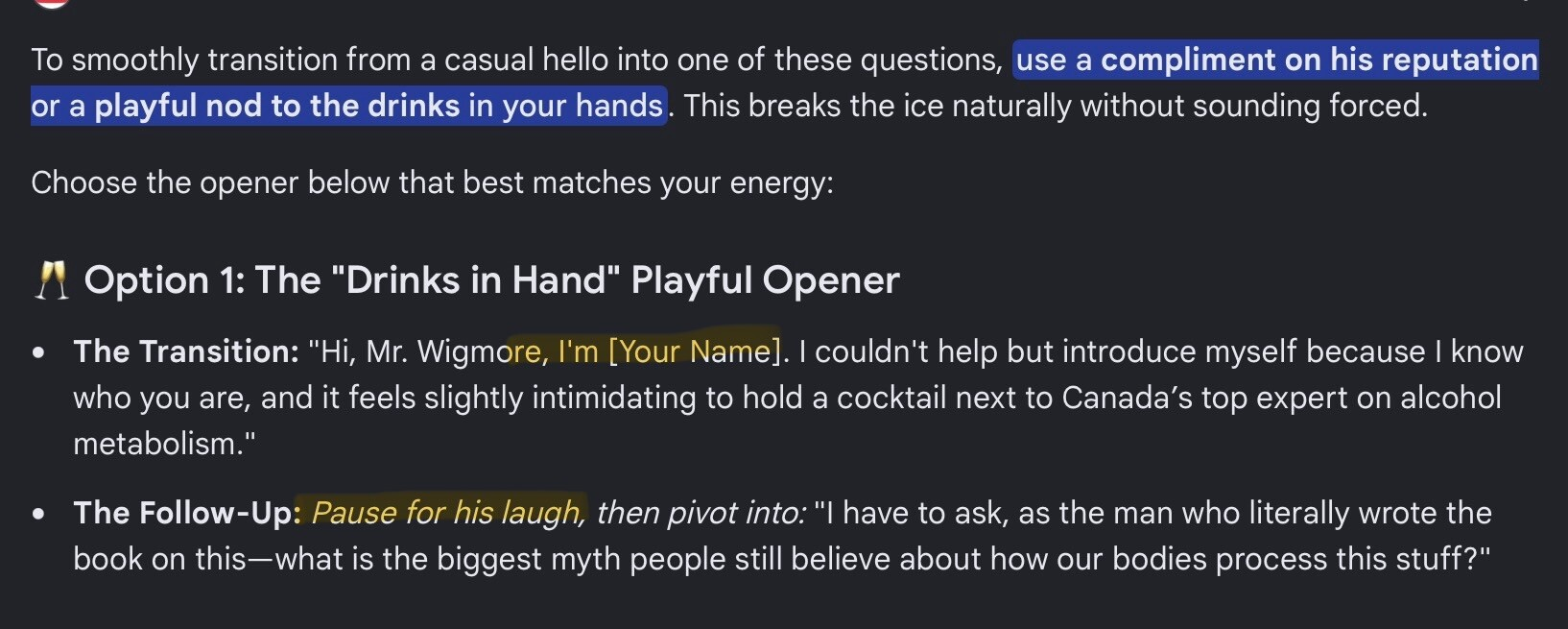
The AI suggested a “Drinks in Hand” playful opener:
“Hi, Mr. Wigmore, I’m [Your Name]. I couldn’t help but introduce myself because I know who you are, and it feels slightly intimidating to hold a cocktail next to Canada’s top expert on alcohol metabolism.”
The AI then suggested pausing for my laugh before pivoting to a question about the biggest myth people still believe about alcohol metabolism.
Rather than “pause for his laugh,” I would more likely have an “embarrassed silence.” The AI clearly does not understand how awkward it would be to cross-examine someone at a cocktail party – or even to have a normal conversation.
Conclusion – A Beginner's Chess Game
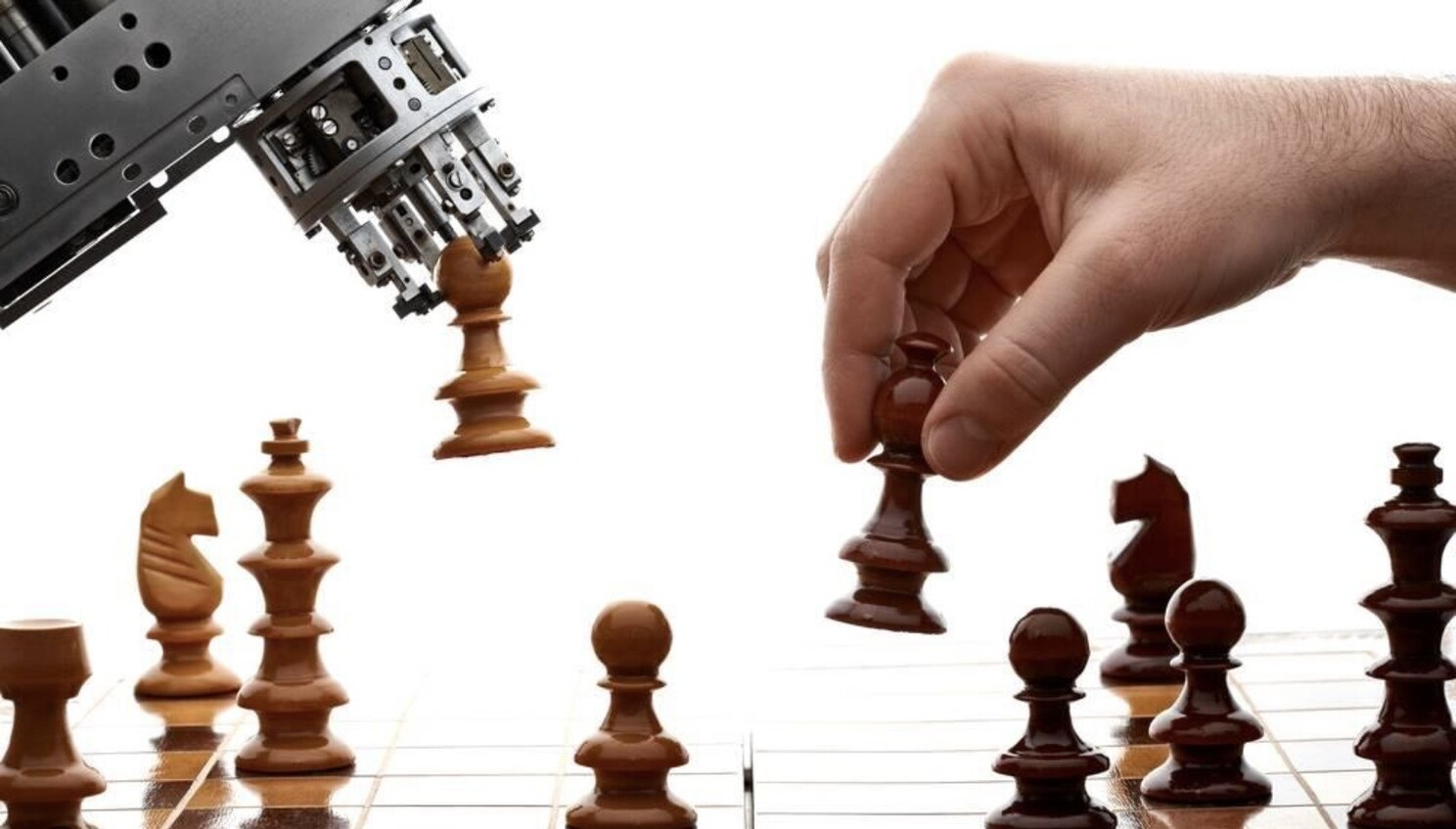 If I were beginning in forensic toxicology, AI would provide some insights and raise some interesting questions and may cause some intimidation. For a novice trying to cross-examine an expert, AI-generated questions might give you a starting point. But it is still at an early level.
It is just like the early chess computers who could be easily defeated, although they could win an occasional game or two. If you tried to cross-examine an expert using only AI-generated questions, you would lose more often than you would win.
But over the years, the computer’s playing ability improved and improved until Deep Blue and other more advanced computers could beat all human players. If you consider criminal court to be like a chess game, this is a potential warning for all. One day, AI may become good enough to cross-examine an expert effectively. But that day is not here yet.
Contact an Expert Who Has Been Cross-Examined Over 700 Times
Consult Canada's Leading Forensic Toxicologist
James Wigmore has been cross-examined in over 700 criminal cases and has faced the best defence lawyers in Canada. With 50 years of experience at the Centre of Forensic Sciences in Toronto and authorship of Wigmore on Alcohol, he provides expert insight into breathalyzer evidence, blood alcohol analysis, and courtroom testimony for legal professionals.
Contact James Wigmore TodayPut 50 years of forensic expertise on your side. Reach out now for expert consultation.
FAQs on Cross-Examining an Expert with AI
What did Google AI suggest about cross-examining James Wigmore?
It suggested never asking "Why?", not fighting him on studies, and sticking to lack of personal knowledge.
Why should you never ask "Why?" to a forensic expert?
The expert will pivot into a masterclass lecture that convinces the jury of their expertise.
Why shouldn't you challenge a forensic expert on studies?
Experts like Wigmore have databases of thousands of peer-reviewed articles and can quote exact studies from memory.
What is the best strategy to cross-examine a forensic expert?
Force them to admit they do not know the exact biological specifics of the accused on that specific night.
What mistake did AI make about alcohol elimination?
It stated the rate is 0.015 mg/100mL/h, when it is actually 15 mg/100mL/h.
What did AI suggest as a cocktail party opener?
A "Drinks in Hand" playful opener followed by a question about the biggest myth people believe about alcohol metabolism.
How did Wigmore react to the cocktail party suggestion?
He said he would more likely have an "embarrassed silence" than a laugh.
What is the chess analogy used in the article?
AI is like early chess computers – easily defeated but improving over time.
What is the LUCAS methodology?
A structured courtroom approach used by James Wigmore, developed by Doug Lucas.
What is the potential warning about AI and courtrooms?
AI may one day become good enough to effectively cross-examine experts, like Deep Blue beating human chess players.
Recent News
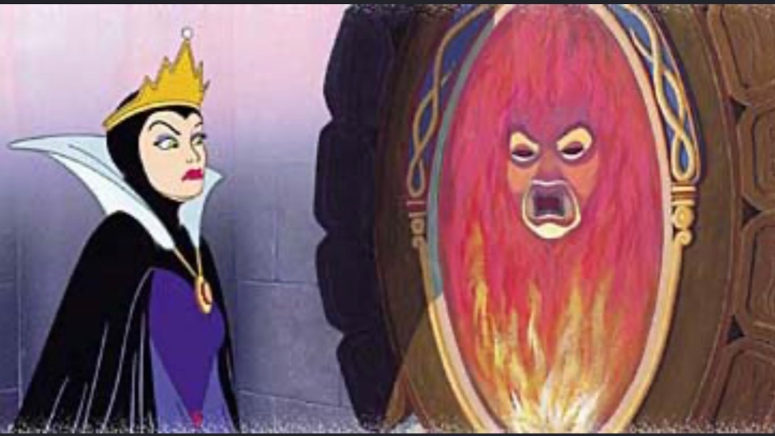
AI Cross-Examines an Expert and Goes to a Cocktail...
Artificial Intelligence is everywhere these days – writing articles, generating images, and even suggesting courtroom...
Read More
ALL RISE! The Supreme Court of Canada and the Two ...
The two beer defence – also known as the Carter defence – was a legal strategy used...
Read More
Earthquake!
Listen, Understand, Consider, Answer, Shut-up. The Doug Lucas approach to answering questions in court. When...
Read More
The Top Criminal Lawyer is not Necessarily the Bes...
A good DWI lawyer needs specific technical knowledge, not just a famous name. The rarefied...
Read More