


Blutalkoholkonzentration
A Canadian pilot. A hit-and-run in Germany. A Breathalyzer result of over 160 mg/100mL. And no German expert who understood how the machine worked. This is the story of my first trip to Europe – and a military court martial that hinged on ethanol evidence.

The importance of Blutalkohol as a scientific journal can be gleaned from the fact that the scientific division of the Royal Canadian Mounted Police in Ontario, Canada translated many of the papers published into English. Of special interest were studies concerning the elimination rate of ethanol from blood and back calculating BAC to the time of driving. One Canadian scientist I know from Toronto (Mr James Wigmore) learnt to read German so that he could better understand articles published in Blutalkohol.
A.W. Jones, Blutalkohol, 40: 2011

Learning German for Science
Some German words are easy to understand by English forensic toxicologists, such as the title of this article. Blood alcohol concentration in German is one large word (as is the propensity in German) and spelled with a K rather than a C. The English BAC is BAK in German. The study of ethanol in the body has fascinated scientists for decades, and German researchers were pioneers in this field.
Nowadays with all the numerous translation programs, one does not have to learn German anymore to translate German scientific papers. But back in 1990, I was grateful for every German word I had taught myself, especially those related to ethanol metabolism.
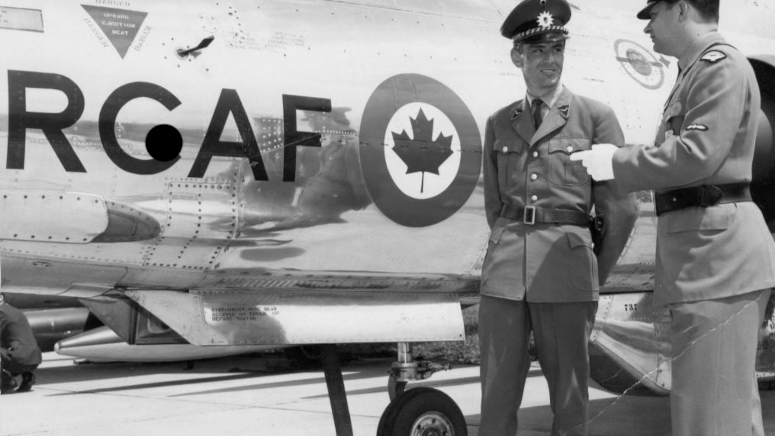
CFB Lahr, Germany
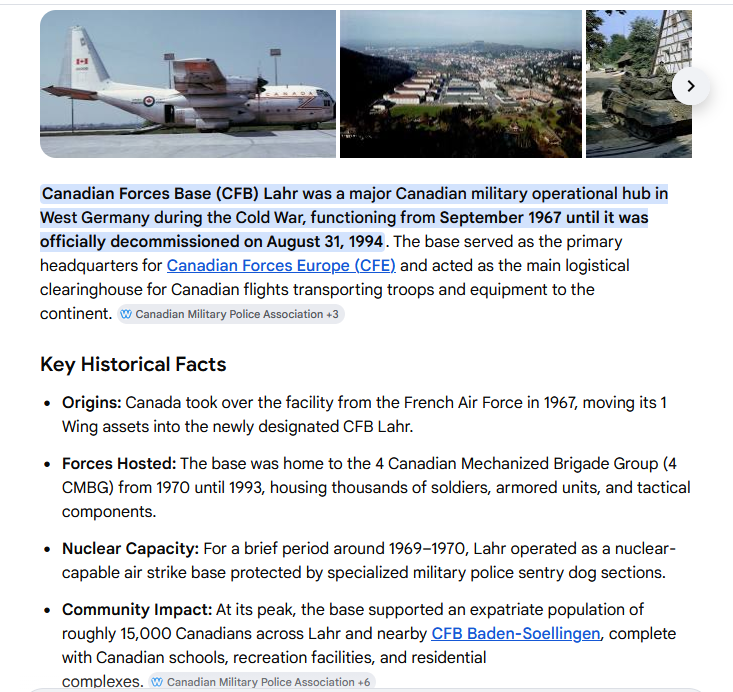 Canadian Forces Base (CFB) Lahr was a major Canadian military operational hub in West Germany during the Cold War, functioning from September 1967 until it was officially decommissioned on August 31, 1994. The base served as the primary headquarters for Canadian Forces Europe (CFE) and acted as the main logistical clearinghouse for Canadian flights transporting troops and equipment to the continent.
Key historical facts about CFB Lahr:
- Canada took over the facility from the French Air Force in 1967
- The base was home to the 4 Canadian Mechanized Brigade Group from 1970 until 1993
- At its peak, the base supported an expatriate population of roughly 15,000 Canadians
- The base included Canadian schools, recreation facilities, and residential complexes
This was my destination in November 1990, where I would apply my knowledge of ethanol to a challenging military case.
Hit and Run
The case involved a Canadian pilot who was drinking and drove home off base at night. He hit a car driven by a German citizen and fled the scene. Fortunately, there were no injuries. The Canadian military police arrived at the pilot’s house and had grounds to demand a Breathalyzer test, which was conducted more than 2 hours after the motor vehicle collision.
The Breathalyzer result was high – over 160 mg/100 mL – but the pilot stated he had 2 drinks after the crash. There were also issues about the accuracy of the Breathalyzer. The captain was charged with impaired driving and faced a military court martial at CFB Lahr under Canadian legal proceedings. The court martial involved a judge who was a lawyer and a 3-member jury or panel of more senior officers. The central question was ethanol concentration at the time of driving, not at the time of testing.
No German Experts!
 There were no German forensic experts for the court martial. At that time, only blood alcohol tests were conducted in Germany, and no one in Germany had ever used a Breathalyzer or knew how it worked. German scientists were familiar with blood ethanol analysis but had no experience with breath testing technology. The prosecutor also said the German experts did not respond well to the Canadian legal system as they were not used to having their expertise or opinion questioned.
The prosecutor had read one of my papers in the Journal of Motor Vehicle Law and wanted me to testify. The Director of the Centre of Forensic Sciences, Doug Lucas, allowed me to travel to CFB Lahr. I would be the expert on ethanol elimination and Breathalyzer technology.
Court Martial
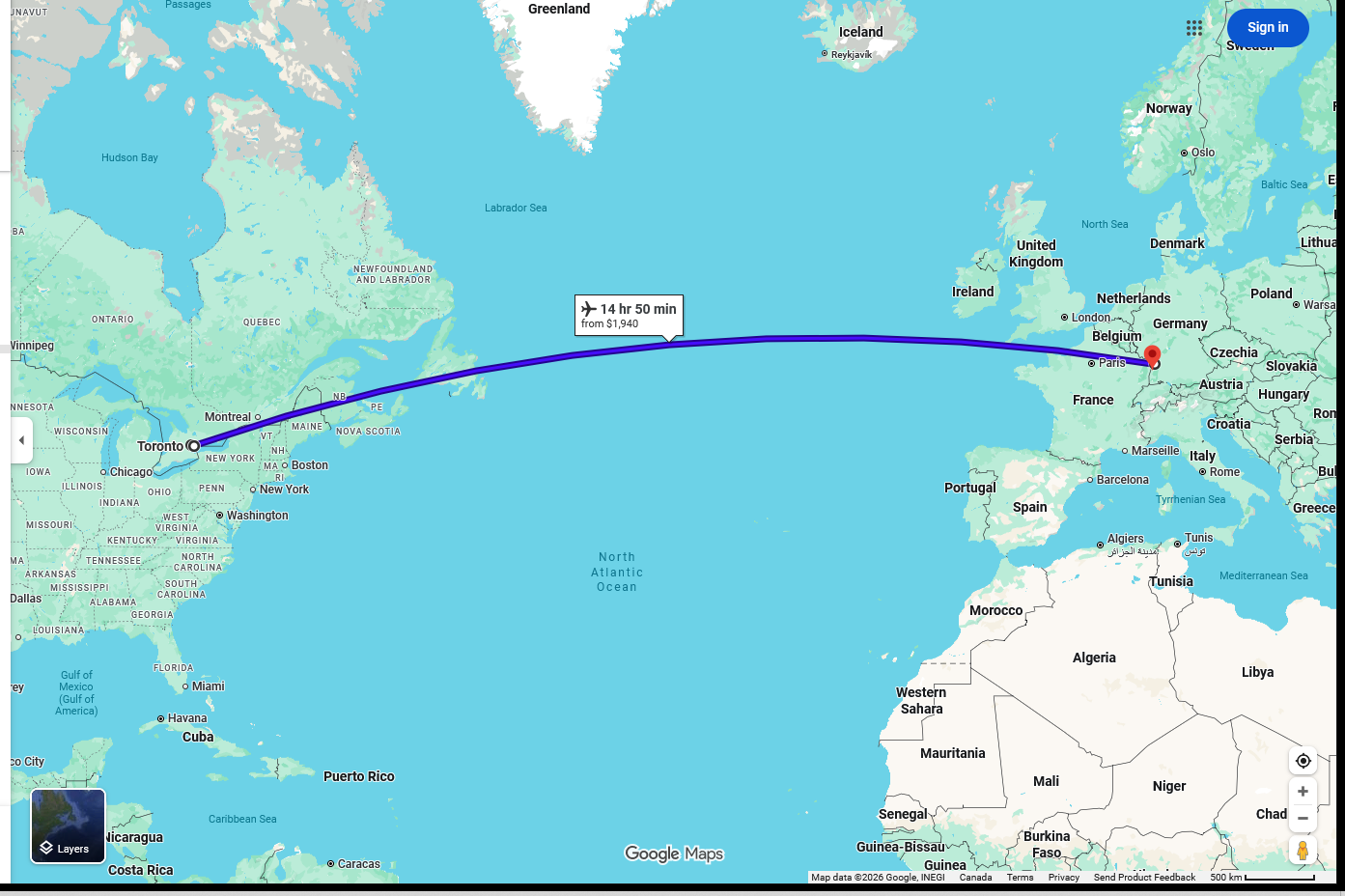
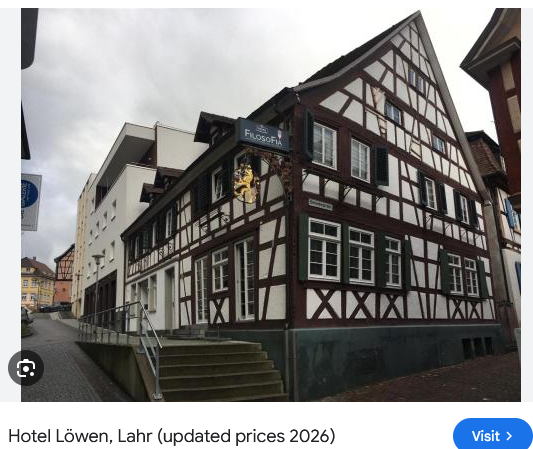 And so on November 26th, 1990, I flew to Frankfurt and then took the train south to Lahr. It was my first time flying to Europe – quite exciting. I stayed in a nice family-run hotel in the old city of Lahr called the “Loewen” (the Lion), which is still in operation today.
I found the worst part of the military court martial was the trip flying over to CFB Lahr and the jet lag, which hit me hard. I testified for 1 hour and 15 minutes for the prosecution and was cross-examined for 1 hour by the defence. Then the president of the jury asked a few questions, which does not occur in criminal trials in Canada. In addition, a straight majority of the jury or panel is sufficient for a conviction or acquittal.
Letter of Appreciation
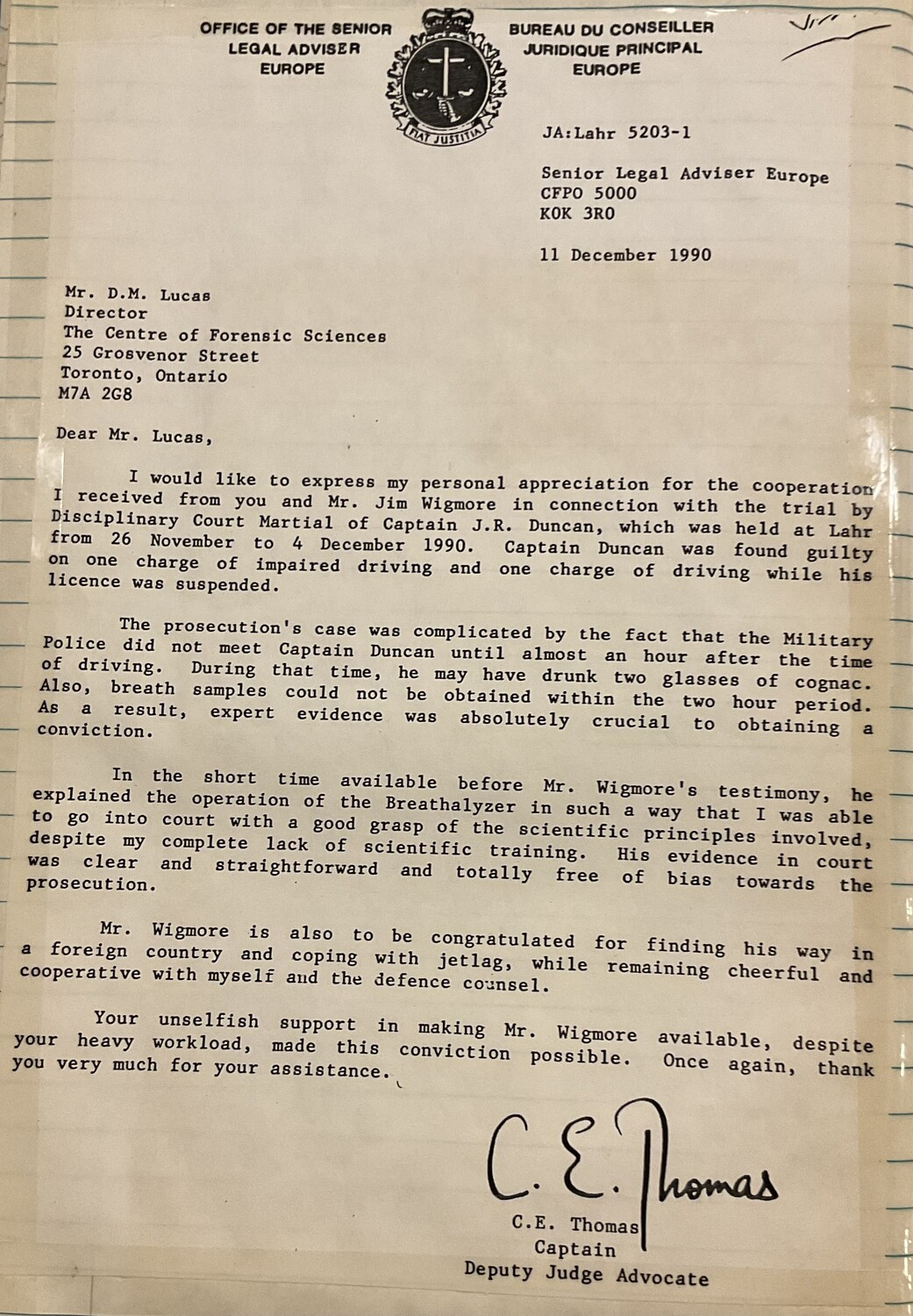 On December 11th, 1990, I received a letter from Captain C.E. Thomas, the Deputy Judge Advocate, addressed to my Director Doug Lucas:
“I would like to express my personal appreciation for the cooperation I received from you and Mr. Jim Wigmore in connection with the trial by Disciplinary Court Martial of Captain J.R. Duncan, which was held at Lahr from 26 November to 4 December 1990. Captain Duncan was found guilty on one charge of impaired driving and one charge of driving while his licence was suspended.
The prosecution’s case was complicated by the fact that the Military Police did not meet Captain Duncan until almost an hour after the time of driving. During that time, he may have drunk two glasses of cognac. Also, breath samples could not be obtained within the two hour period. As a result, expert evidence was absolutely crucial to obtaining a conviction.
In the short time available before Mr. Wigmore’s testimony, he explained the operation of the Breathalyzer in such a way that I was able to go into court with a good grasp of the scientific principles involved, despite my complete lack of scientific training. His evidence in court was clear and straightforward and totally free of bias towards the prosecution.
Mr. Wigmore is also to be congratulated for finding his way in a foreign country and coping with jet lag, while remaining cheerful and cooperative with myself and the defence counsel.
Your unselfish support in making Mr. Wigmore available, despite your heavy workload, made this conviction possible. Once again, thank you very much for your assistance.”
Conclusion
The conviction of Captain Duncan on charges of impaired driving and driving while suspended was a success for military justice. The case demonstrated the importance of expert ethanol testimony when breath samples are delayed and the accused claims to have consumed ethanol after driving.
I learned a few lessons from this experience:
- Learning a foreign language – even just scientific terms – can open doors
- Jet lag is harder than any cross-examination
- A clear, unbiased expert witness on ethanol can make the difference between conviction and acquittal
Contact an Ethanol Expert Who Testified at CFB Lahr
Consult Canada's Most Decorated Forensic Toxicologist
James Wigmore testified at a military court martial in Germany in 1990, helping secure a conviction in a complex ethanol case involving delayed breath testing. With over 29 years at Toronto’s Centre of Forensic Sciences, more than 700 criminal cases, and 70+ peer-reviewed publications, he provides unparalleled expertise in forensic toxicology, alcohol analysis, and courtroom testimony.
Contact James Wigmore TodayPut an expert who has testified internationally on your side. Reach out now for expert consultation.
What does Blutalkoholkonzentration mean?
It is the German word for blood alcohol concentration. It is spelled with a K instead of a C.
When did James Wigmore travel to CFB Lahr?
He flew to Frankfurt on November 26th, 1990, and then took the train south to Lahr.
What was the Breathalyzer result in the pilot's case?
The result was over 160 mg/100 mL, but the pilot claimed he had 2 drinks after the crash.
Why were there no German forensic experts at the court martial?
At that time, only blood alcohol tests were conducted in Germany, and no one in Germany had ever used a Breathalyzer or knew how it worked.
How long did Wigmore testify?
He testified for 1 hour and 15 minutes for the prosecution and was cross-examined for 1 hour by the defence.
What was the outcome of the court martial?
Captain Duncan was found guilty on one charge of impaired driving and one charge of driving while his licence was suspended.
Who wrote the letter of appreciation to Doug Lucas?
Captain C.E. Thomas, the Deputy Judge Advocate, wrote the letter on December 11th, 1990.
What did the prosecutor read that led to Wigmore being called?
The prosecutor had read one of Wigmore's papers in the Journal of Motor Vehicle Law.
Where did Wigmore stay in Lahr?
He stayed at a family-run hotel in the old city of Lahr called the "Loewen" (the Lion), which is still in operation today.
What was the hardest part of the military court martial for Wigmore?
The jet lag from flying to CFB Lahr hit him harder than any cross-examination.
Recent News
AI Cross-Examines an Expert and Goes to a Cocktail...
Artificial Intelligence is everywhere these days – writing articles, generating images, and even suggesting courtroom...
Read More
ALL RISE! The Supreme Court of Canada and the Two ...
The two beer defence – also known as the Carter defence – was a legal strategy used...
Read More
Earthquake!
Listen, Understand, Consider, Answer, Shut-up. The Doug Lucas approach to answering questions in court. When...
Read More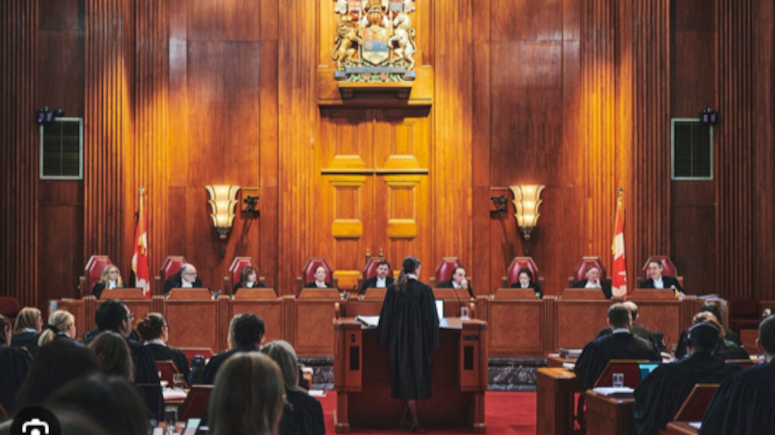
The Top Criminal Lawyer is not Necessarily the Bes...
A good DWI lawyer needs specific technical knowledge, not just a famous name. The rarefied...
Read More