


Once More Into the Breach: Junkert Impaired Driving Causing Death Case
Some DWI cases change the legal landscape forever. The Junkert case is one of them. It marked a pivotal shift in how Canadian courts treat impaired driving causing death – moving from sentences measured in months to sentences measured in years. As a forensic toxicologist, I have testified in hundreds of DWI cases over my 50-year career. But the Junkert trial stands apart. It was high-profile, emotionally charged, and legally significant. It was also the last impaired driving causing death jury trial I ever testified at. As Shakespeare wrote in Henry V: “Once more into the breach, dear friends, once more.” Those words echoed in my mind as I prepared to take the stand one final time.
Table of Contents


Once more into the breach, dear friends, once more.
Shakespeare, Henry V, Act III, Scene I

The Collision
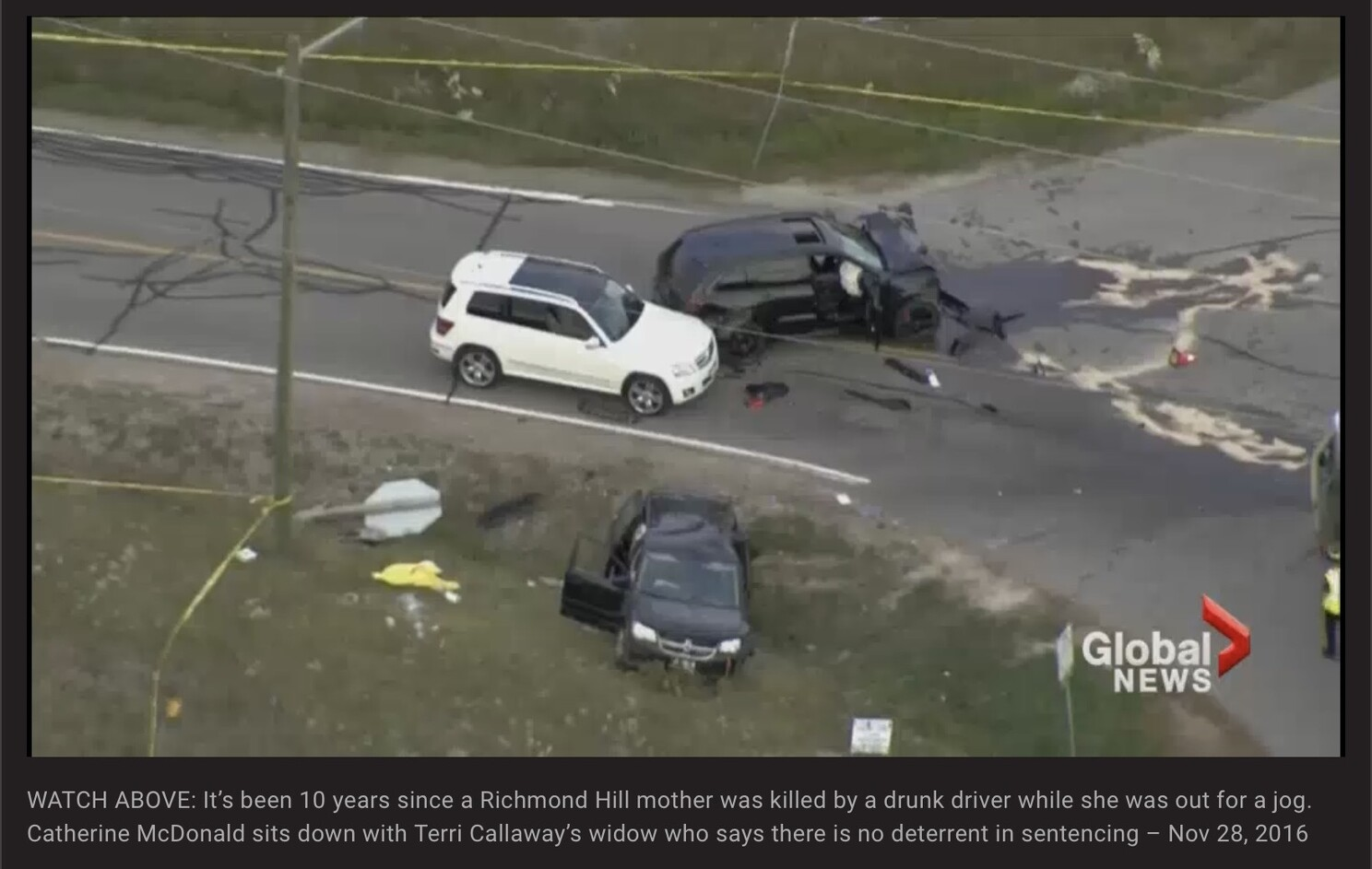 On Wednesday, November 29th, 2006, at approximately 8:45 pm, Matthew Junkert drove at a high speed in a residential neighbourhood, hopped over the curb and struck and killed Terri Callaway, a 35-year-old mother of 4 who was out jogging. The driver had been drinking and provided Intoxilyzer 5000C results of 130 and 130 milligrams of alcohol in 100 millilitres of blood at 10:20 pm and 10:40 pm respectively. This was a DWI case that would capture public attention across Ontario.
The facts were devastating. A mother of four, out for an evening jog, killed by a driver who chose to drink and drive at high speed through a residential neighbourhood. Terri Callaway’s death was preventable. Every DWI fatality is preventable.
"Take It."
The head crown attorney of Newmarket wanted me to be the forensic toxicologist in this case as it was so important and high profile. I dithered around a bit, as since I retired in 2005, I was trying to cut down on my criminal court appearances. But my wonderful wife Penelope had overheard the conversation and said, “Take it.”
So I took it. In my 50-year career, that moment stands out – my wife’s quiet insistence that this DWI case mattered enough to come out of retirement for. She was right, as she usually is.
Trial
And so on Wednesday, June 18th, 2008, I appeared on the stand in a suit in front of a jury. I calculated that Mr. Junkert had a blood alcohol concentration of between 130 and 170 mg/100mL at the time of the collision. I estimated that Mr. Junkert had at least the equivalent of 7 bottles of beer in his system at the time of the Intoxilyzer tests. This calculation was conducted so the jury would know that this BAC was not due to just 1 or 2 bottles of beer.
I also stated that Mr. Junkert would have significant impairment of driving ability at this BAC range. My testimony was critical to establishing the degree of impairment – a key factor in the DWI conviction.
Surprisingly, the defence only cross-examined me for a short period of time compared to Brian Greenspan (Ramage case) and Allen Gold (LaChapelle case). Perhaps they realized I excelled at cross-examinations. In a DWI trial, the forensic toxicologist’s testimony can make or break the case.
Conviction
 The case was a landmark DWI prosecution. Matthew Junkert was found guilty of impaired driving causing death and dangerous driving causing death. In April 2009, Justice Peter Wright sentenced Junkert to five years in prison, followed by a 10-year driving prohibition.
Junkert appealed his conviction and sentence, claiming the trial judge overemphasized his level of impairment. In August 2010, the Court of Appeal for Ontario dismissed his appeal, ruling that the toxicologist’s evidence and his reckless driving pattern heavily justified the “significantly impaired” classification. The DWI conviction stood.
Appeal
The Junkert case was appealed to the Ontario Court of Appeal but was denied. The judges cited my opinion that at a BAC of 130 mg/100mL, Junkert would have experienced:
- Decrease in alertness
- Disruption in reaction time
- Decrease in peripheral vision
- Impairment of visual tracking
- Increased propensity to take risks
These effects explain why a DWI driver with a BAC of 130 mg/100mL is a danger to everyone on the road – joggers, pedestrians, other drivers, and passengers.
Conclusion
The Junkert trial and sentencing represented a pivotal shift towards longer time in custody in impaired driving causing death cases – from months to years. It was also the last impaired driving causing death jury trial that I testified at. That DWI case changed the legal landscape in Canada, and I am proud to have played a small role in it.
Terri Callaway’s family deserved justice. The jury delivered it. The Court of Appeal upheld it. And Canadian DWI law was forever changed.
References
Contact a Forensic Expert Who Has Testified in Landmark DWI Cases
Consult Canada's Leading Forensic Toxicologist
James Wigmore has testified in over 700 criminal cases, including the landmark R. v. Junkert DWI case that changed Canadian sentencing law. With 50 years of experience at the Centre of Forensic Sciences in Toronto and authorship of Wigmore on Alcohol, he provides expert insight into blood alcohol analysis and courtroom testimony for legal professionals.
Contact James Wigmore TodayPut 50 years of forensic expertise on your side. Reach out now for expert consultation.
FAQs on the Junkert DWI Case
What happened in the Junkert DWI case?
Matthew Junkert drove at high speed in a residential neighbourhood, struck and killed Terri Callaway, a mother of 4, on November 29th, 2006.
What was Junkert's blood alcohol concentration?
His Intoxilyzer 5000C results were 130 and 130 mg/100mL at 10:20 pm and 10:40 pm.
What was James Wigmore's role in the trial?
He testified as the forensic toxicologist, calculating Junkert's BAC at the time of the collision was between 130 and 170 mg/100mL.
How many beers did Wigmore estimate Junkert had consumed?
At least the equivalent of 7 bottles of beer at the time of the Intoxilyzer tests.
What was the verdict?
Junkert was found guilty of impaired driving causing death and dangerous driving causing death.
What was the sentence?
Five years in prison, followed by a 10-year driving prohibition.
Was the conviction appealed?
Yes, but the Court of Appeal for Ontario dismissed the appeal in August 2010.
What effects did Wigmore say a BAC of 130 mg/100mL would cause?
Decrease in alertness, disruption in reaction time, decrease in peripheral vision, impairment of visual tracking, and increased propensity to take risks.
Why was the Junkert case significant?
It represented a pivotal shift towards longer custody in impaired driving causing death cases, from months to years.
Who was the victim in the Junkert case?
Terri Callaway, a 35-year-old mother of 4 who was out jogging.
Recent News
Once More Into the Breach: Junkert Impaired Drivin...
Some DWI cases change the legal landscape forever. The Junkert case is one of them....
Read More
ALL RISE! The Supreme Court of Canada and the Two ...
The two beer defence – also known as the Carter defence – was a legal strategy used...
Read More
Cannabis and Alcohol and Driving: 1+1 =3?
When it comes to driving impairment, the combination of alcohol and cannabis is far more dangerous than...
Read More
A Real Wingding of a Conference! The Joint SAFS, M...
In September 2004, hundreds of forensic scientists from across North America gathered in Orlando for a joint...
Read More