


A Real Wingding of a Conference! The Joint SAFS, MAAFS, MAFS, and CSFS Meeting at Orlando
In September 2004, hundreds of forensic scientists from across North America gathered in Orlando for a joint meeting of four major forensic organizations. It was a rare opportunity for forensic scientists from different regions and disciplines to share research, network, and collaborate.
But this conference would be remembered for more than just the scientific presentations. Between a groundbreaking workshop on forensic alcohol toxicology and a last-minute escape from Hurricane Jeanne, this gathering of forensic scientists became an unforgettable adventure. The old Grosvenor Resort in Orlando hosted the Joint International Meeting of the Southern Association of Forensic Scientists (SAFS), the Mid-Atlantic Association of Forensic Scientists (MAAFS), the Midwestern Association of Forensic Scientists (MAFS), and the Canadian Society of Forensic Science (CSFS) from September 19 to 24, 2004. For the forensic scientists in attendance, it was a wingding of a conference – and a test of survival.

Its time to put the forensic back into forensic alcohol toxicology.
James Wigmore, Orlando, September 2004

Put the Forensic Back into Forensic Alcohol Toxicology
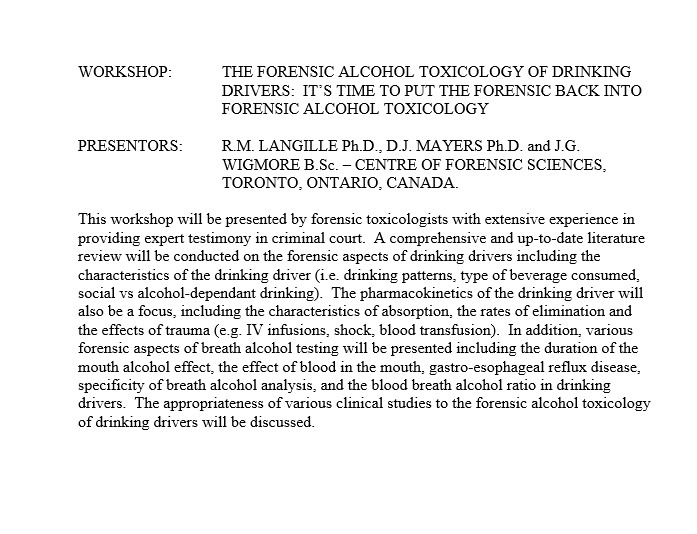 The title of the half-day workshop that my colleagues Rob Langille, Daryl Mayers and I conducted was “The Forensic Alcohol Toxicology of Drinking Drivers: Its Time to put the Forensic Back Into Forensic Alcohol Toxicology.” The main theme was that too many studies cited in court and journals were based on unrealistic conditions that did not match the actual drinking and driving that occurred in the field. As forensic scientists, we believed that laboratory conditions should reflect real-world drinking patterns.
For example, a typical drinking scenario used under laboratory conditions is the consumption of 1 g/kg alcohol neat on an empty stomach within 10 to 20 minutes. This is highly unrealistic and causes unusual blood/breath alcohol ratios, time to maximum BACs, and mouth alcohol effects that are not seen in the field in actual drinking drivers. In the field, the typical drinking driver consumes mainly beer over a period of several hours, which results in a much shorter time to maximum BAC. This distinction between laboratory and field conditions was critical for forensic scientists who testify in court.
Our workshop synopsis summarized the key topics we covered:
- Characteristics of the drinking driver – drinking patterns, type of beverage consumed, social vs alcohol-dependent drinking
- Pharmacokinetics of the drinking driver – absorption characteristics, rates of elimination, and effects of trauma
- Forensic aspects of breath alcohol testing – duration of mouth alcohol effect, blood in the mouth, gastro-esophageal reflux disease, specificity of breath alcohol analysis, and the blood/breath alcohol ratio
The evaluation of our workshop by the attendees was very satisfying. It made all our work worthwhile. For forensic scientists, there is no greater reward than sharing knowledge with colleagues who will apply it in their own practice.
Hurricane Jeanne
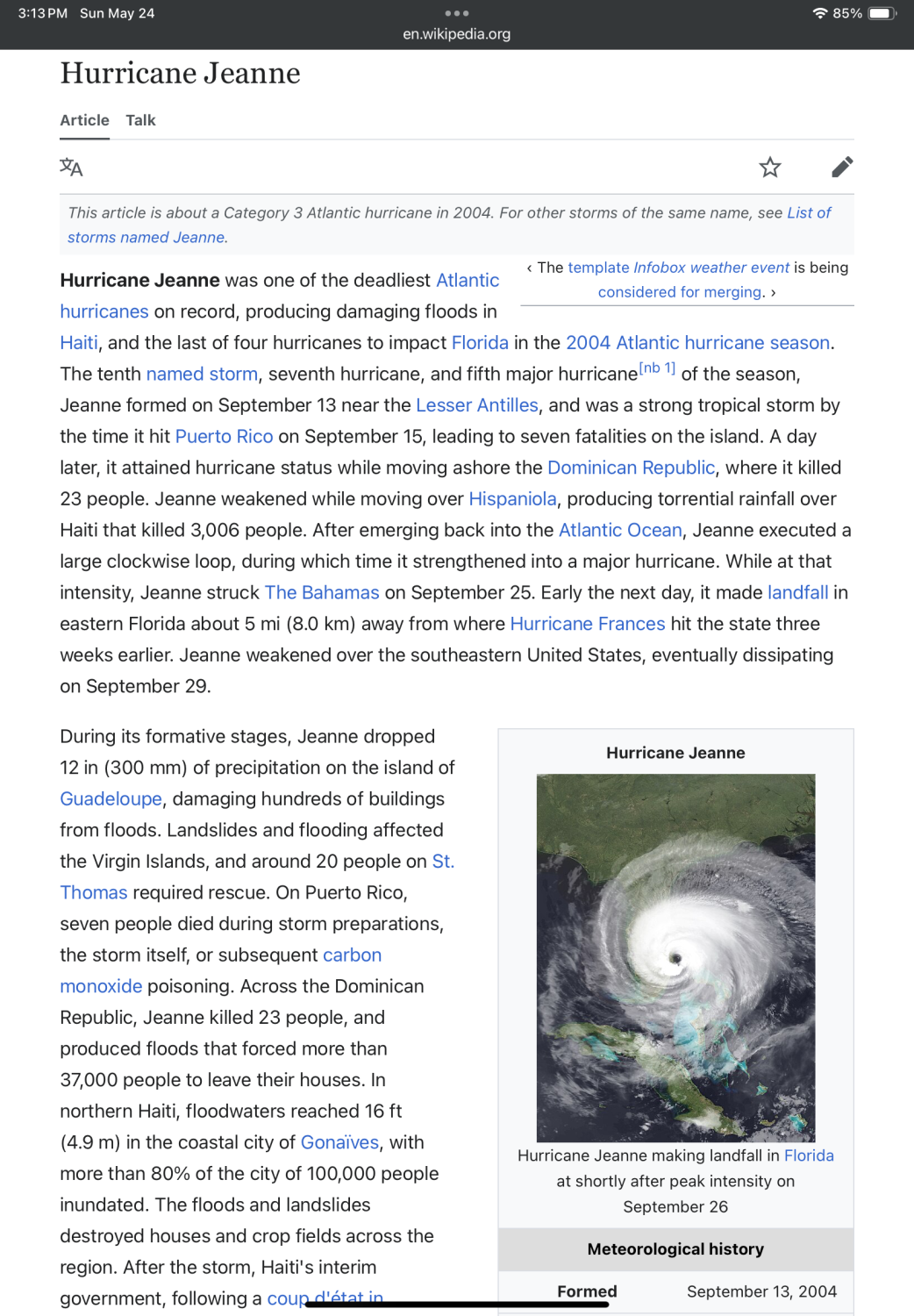 Whenever I checked the weather channel on TV throughout the conference, Hurricane Jeanne seemed to be hovering off the coast – until the conference was finished on Friday September 24th, 2004. Many people would be taking planes back home on Saturday September 25th, 2004, when it made a beeline for the Florida coast and Orlando. The Orlando airport was closed at 6:00 pm on Saturday, and all planes flew out of its path.
Hurricane Jeanne was one of the deadliest Atlantic hurricanes on record, producing damaging floods in Haiti and the last of four hurricanes to impact Florida in the 2004 Atlantic hurricane season. It had already killed over 3,000 people in Haiti before making landfall in Florida. For the forensic scientists at the conference, the approaching storm added an element of urgency to travel plans.
Daryl Mayers, who flew on Air Canada, was able to fly out. But we were notified that JetsGo would not be flying due to the hurricane and that we could get a flight out of Orlando by JetsGo one week later. Good luck!
JetsNoGo
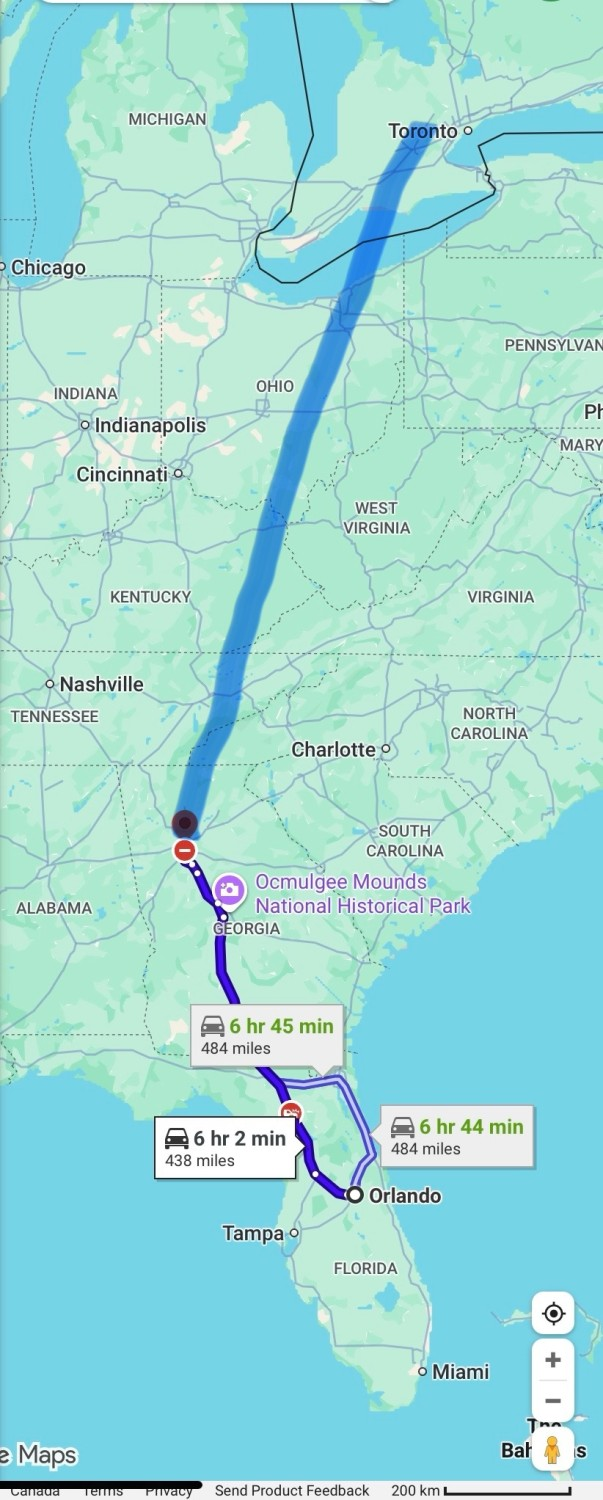 Rob Langille, biologists Elida Kafarowski, Alexandra Welsh, and myself had been booked on JetsGo by the Centre of Forensic Sciences to save money. It turns out that JetsGo was JetsNoGo. So the four of us who took JetsGo decided to rent a car in Orlando and drive to Atlanta, then fly from there back home to Toronto. This was not the plan any forensic scientists had anticipated.
The drive from Orlando to Atlanta was somewhat surrealistic. The highways had all the toll booths open, flashing lights and gates up to allow faster evacuation. The traffic was heavy but moving quickly. It was great putting more and more distance between us and the hurricane. We made it to Atlanta after a long drive and flew back to Toronto the next day. It probably cost the lab about 3X that amount that we would have saved by taking JetsGo instead of Air Canada. Needless to say, JetsGo eventually declared bankruptcy.
Conclusion
“The most important and productive outcome of a scientific conference is the collaboration that happens in the hallways, not the presentation in the main room.” – Anon, Goodreads.
The 2004 Orlando conference reminded me of this truth. Yes, the workshop was valuable. Yes, the presentations were informative. But the real value for forensic scientists lies in the connections made between sessions – the conversations over coffee, the shared experiences, and the friendships that last a lifetime. And sometimes, the most memorable part of a conference is not the science at all, but the adventure of getting home safely.
Contact a Forensic Scientist with Decades of Experience
Consult Canada's Leading Forensic Toxicologist
James Wigmore has presented at international conferences, testified in over 700 criminal cases, and authored definitive texts on alcohol and cannabis toxicology. With 50 years of experience at the Centre of Forensic Sciences in Toronto, he provides expert insight for legal professionals seeking a qualified forensic scientist.
Contact James Wigmore TodayPut 50 years of forensic science expertise on your side. Reach out now for expert consultation.
FAQs on the Forensic Scientists Conference in Orlando
What conference did James Wigmore attend in 2004?
The Joint International Meeting of SAFS, MAAFS, MAFS, and CSFS at the Grosvenor Resort in Orlando from September 19-24, 2004.
What was the title of the workshop conducted by Wigmore and his colleagues?
"The Forensic Alcohol Toxicology of Drinking Drivers: Its Time to put the Forensic Back Into Forensic Alcohol Toxicology."
Why did Wigmore believe laboratory drinking studies were unrealistic?
They typically involve drinking 1 g/kg alcohol neat on an empty stomach within 10-20 minutes, which does not reflect real-world drinking patterns of beer over several hours.
What was the name of the hurricane that threatened the conference?
Hurricane Jeanne, which made landfall in Florida on September 25, 2004.
What happened to the JetsGo flight?
JetsGo cancelled all flights due to the hurricane, forcing Wigmore and his colleagues to rent a car and drive to Atlanta to catch a flight home.
How did Wigmore and his colleagues escape Orlando?
They rented a car and drove from Orlando to Atlanta, then flew back to Toronto the next day.
What was the drive from Orlando to Atlanta like?
Surrealistic – all toll booths were open with flashing lights and gates up to allow faster evacuation. Traffic was heavy but moving quickly.
What was the estimated cost comparison of driving vs flying?
The alternative travel arrangements cost about 3 times more than what was saved by booking JetsGo.
What is the most valuable part of a scientific conference according to the conclusion?
The collaboration that happens in the hallways, not the presentations in the main room.
Recent News
Once More Into the Breach: Junkert Impaired Drivin...
Some DWI cases change the legal landscape forever. The Junkert case is one of them....
Read More
ALL RISE! The Supreme Court of Canada and the Two ...
The two beer defence – also known as the Carter defence – was a legal strategy used...
Read More
Cannabis and Alcohol and Driving: 1+1 =3?
When it comes to driving impairment, the combination of alcohol and cannabis is far more dangerous than...
Read More
A Real Wingding of a Conference! The Joint SAFS, M...
In September 2004, hundreds of forensic scientists from across North America gathered in Orlando for a joint...
Read More